Uwe Novacki
407 KM/H · 2005
Volkswagen's chief driving safety instructor — the first man to take a production car past 400 km/h.
THE FIRST TO BREAK 400 KM/H
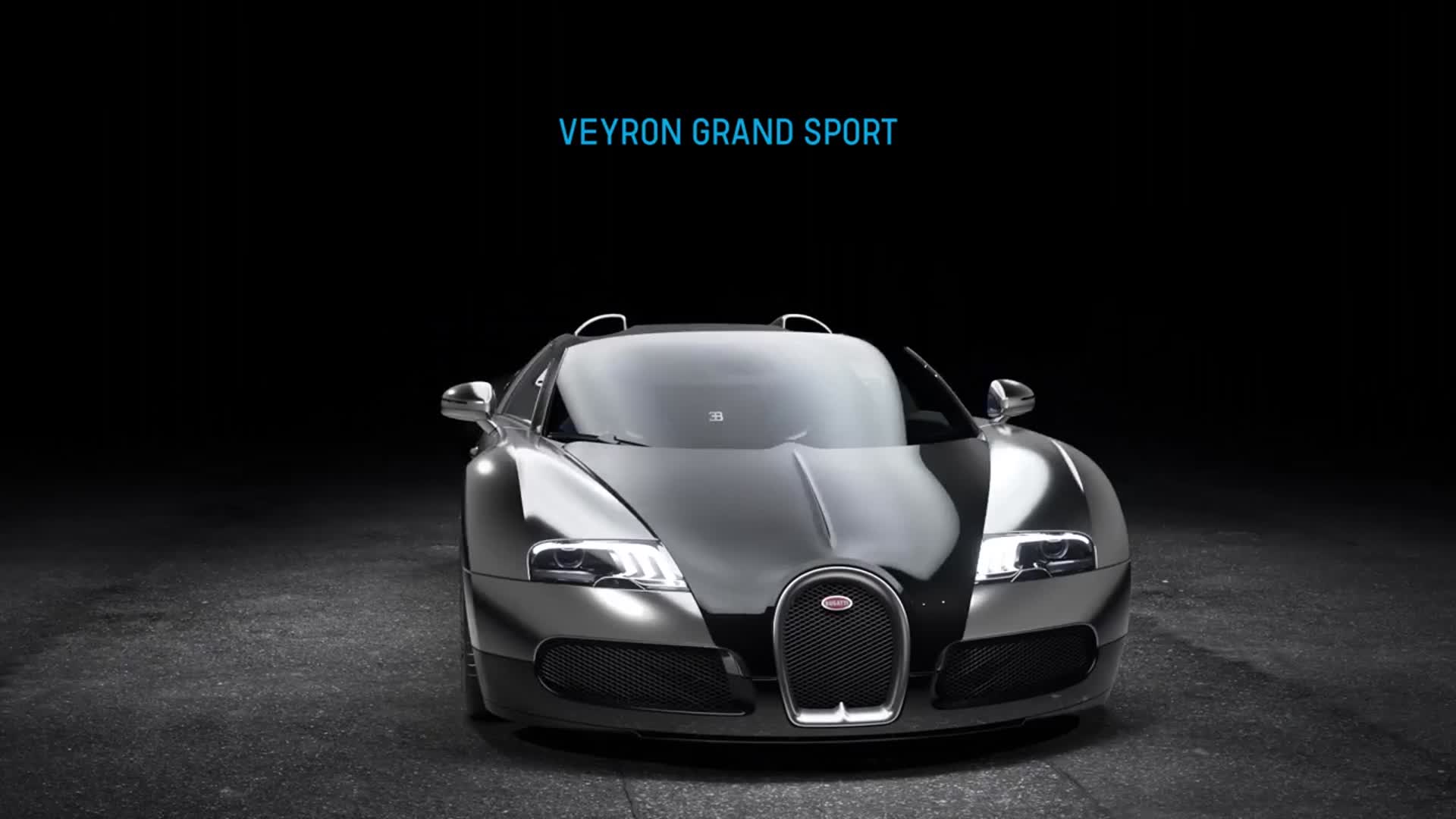
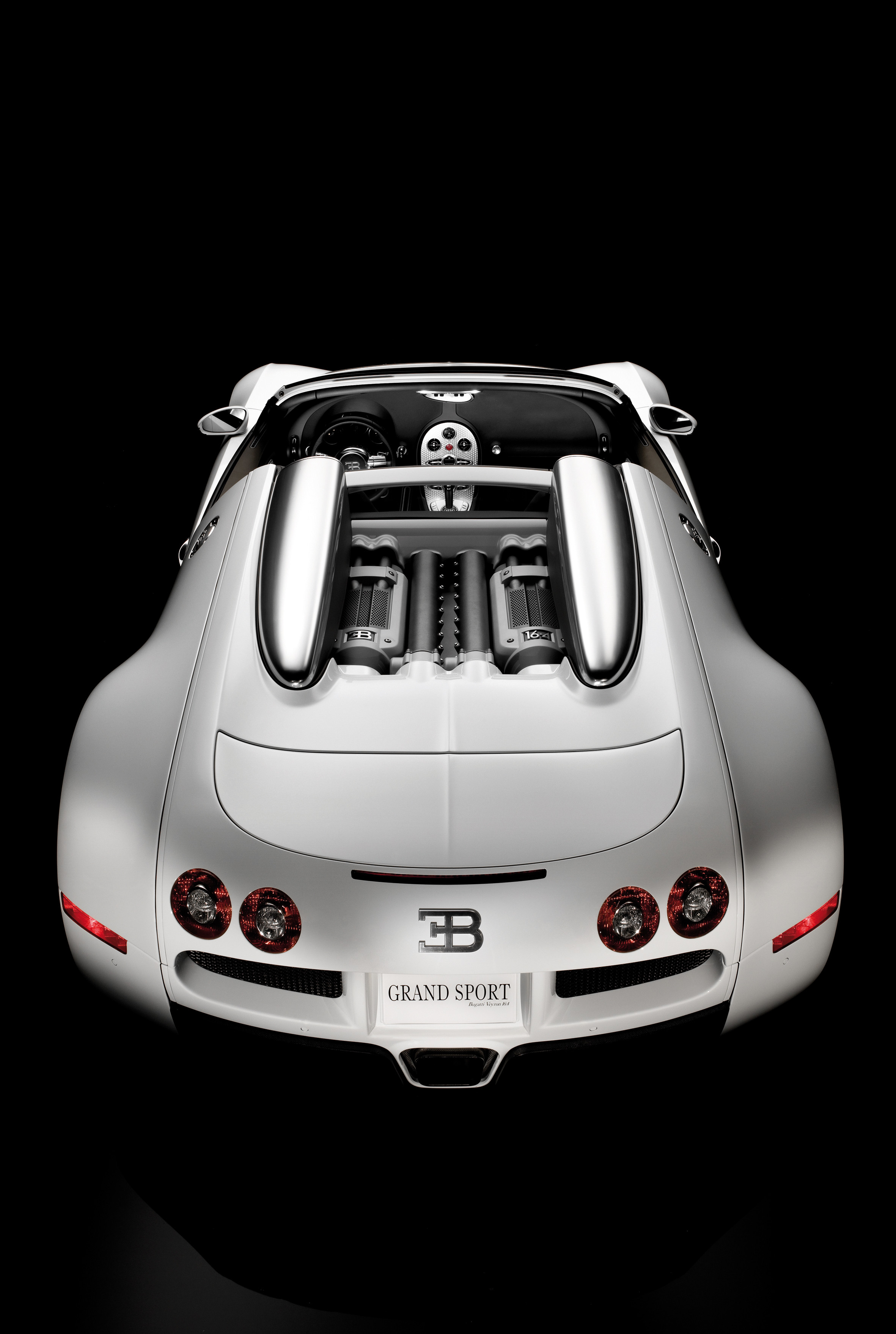
The Veyron family's first convertible: 1,001 PS with a removable roof — 407 km/h when closed.
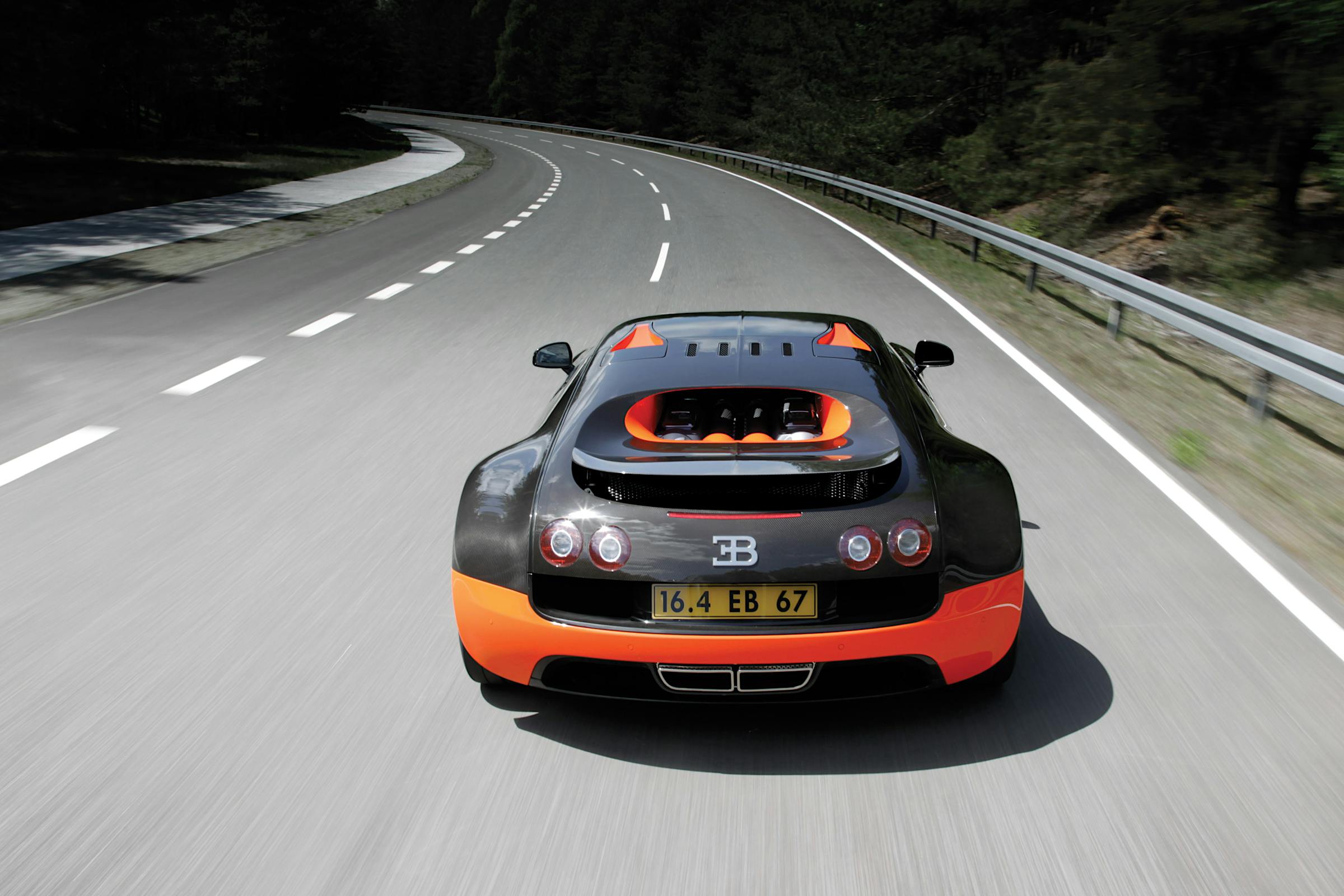
1,200 PS and NACA roof intakes — the production-car world record, set in July 2010.
The 1,200 PS roadster king — 408.84 km/h in 2013, the open-top production record.
The Veyron is the first hyper sports car of modern times —
in 2005, it wrote a new page in production-car history with 1,001 PS and 407 km/h.
From a sketch on an envelope in 1997, to the first firing of the W16 at 1,000+1 PS in 2001,
to series delivery in 2005 — 450 cars, eight years, and the meaning of "possible" redefined.
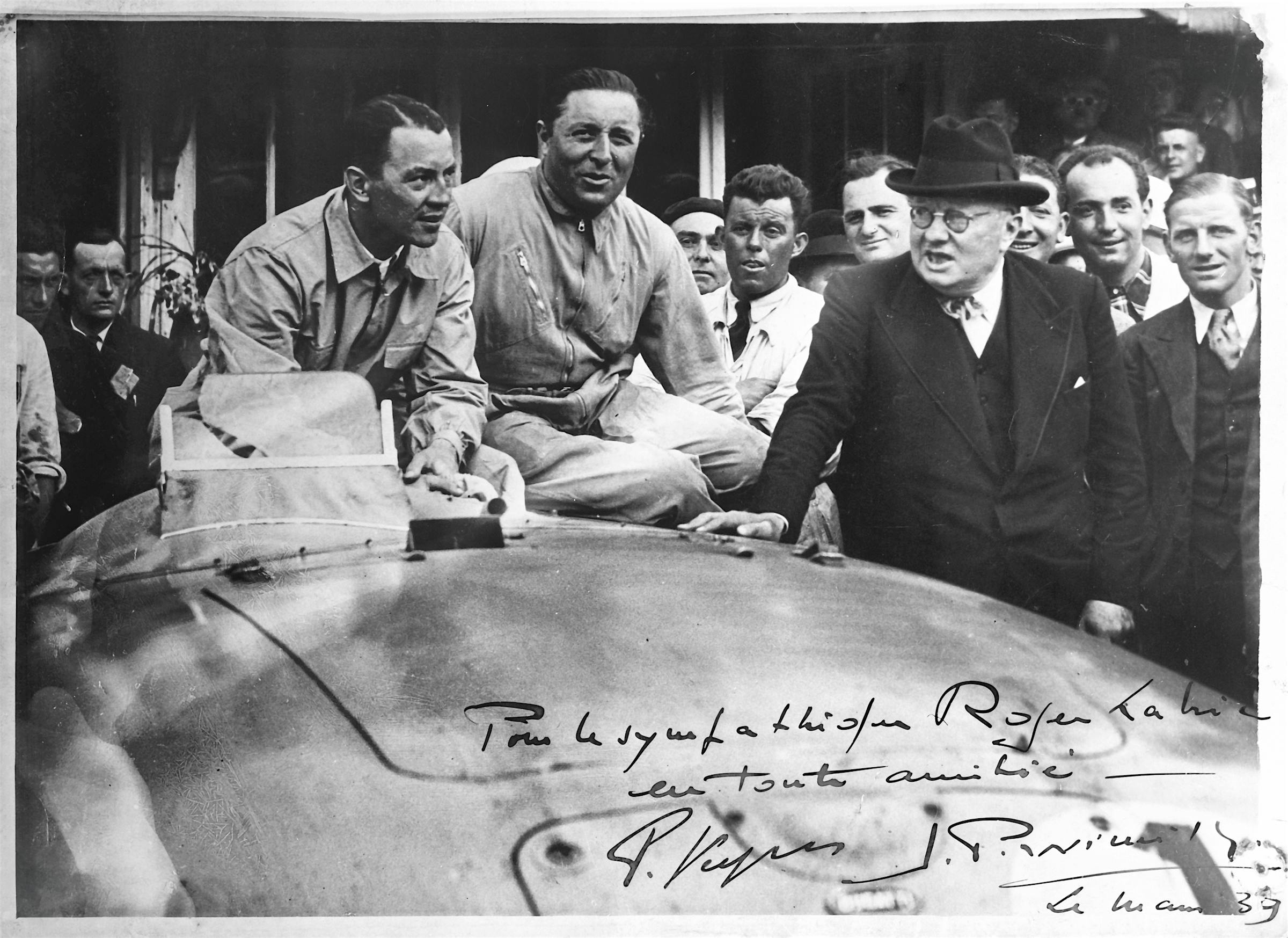
Pierre Veyron (1903–1970) was a Bugatti factory driver — in 1939, he and Jean-Pierre Wimille won the Le Mans 24 Hours in the Type 57G Tank. Naming this car after him is Bugatti's most solemn tribute to its heritage of speed.
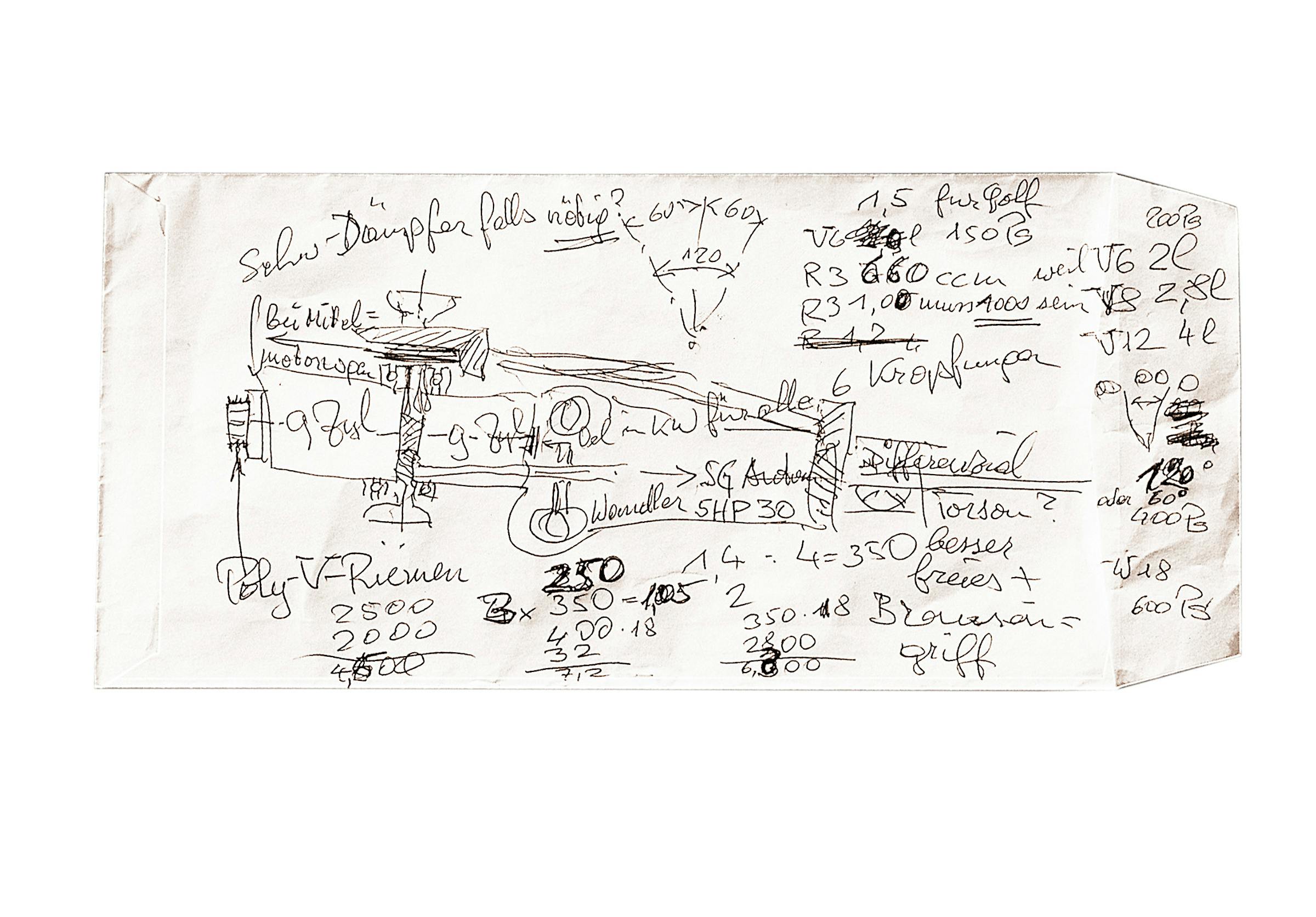
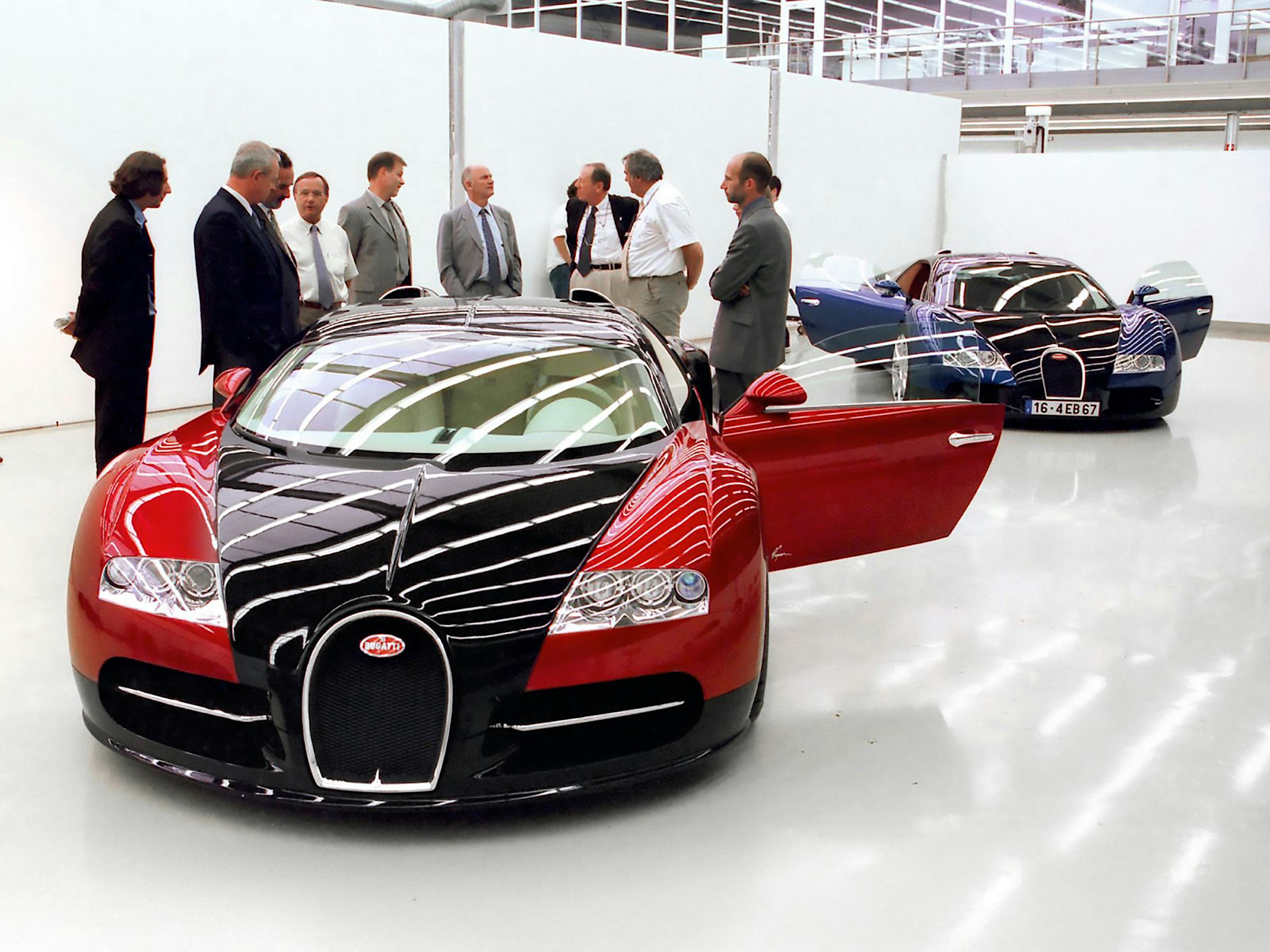
Ferdinand K. Piëch, then Chairman of Volkswagen AG, set the goal: an output beyond anything in existence — the discussion ran from V6 and V8 to V12 and on to 18 cylinders. In 1997, he sketched the idea on a train between Tokyo and Nagoya; a few months later, Volkswagen acquired the Bugatti brand, and the engine found its home. In 2005, the idea became reality.
Back then, there was no literature or empirical data for production engines with more than twelve cylinders — or for production vehicles that could go faster than 350 km/h.
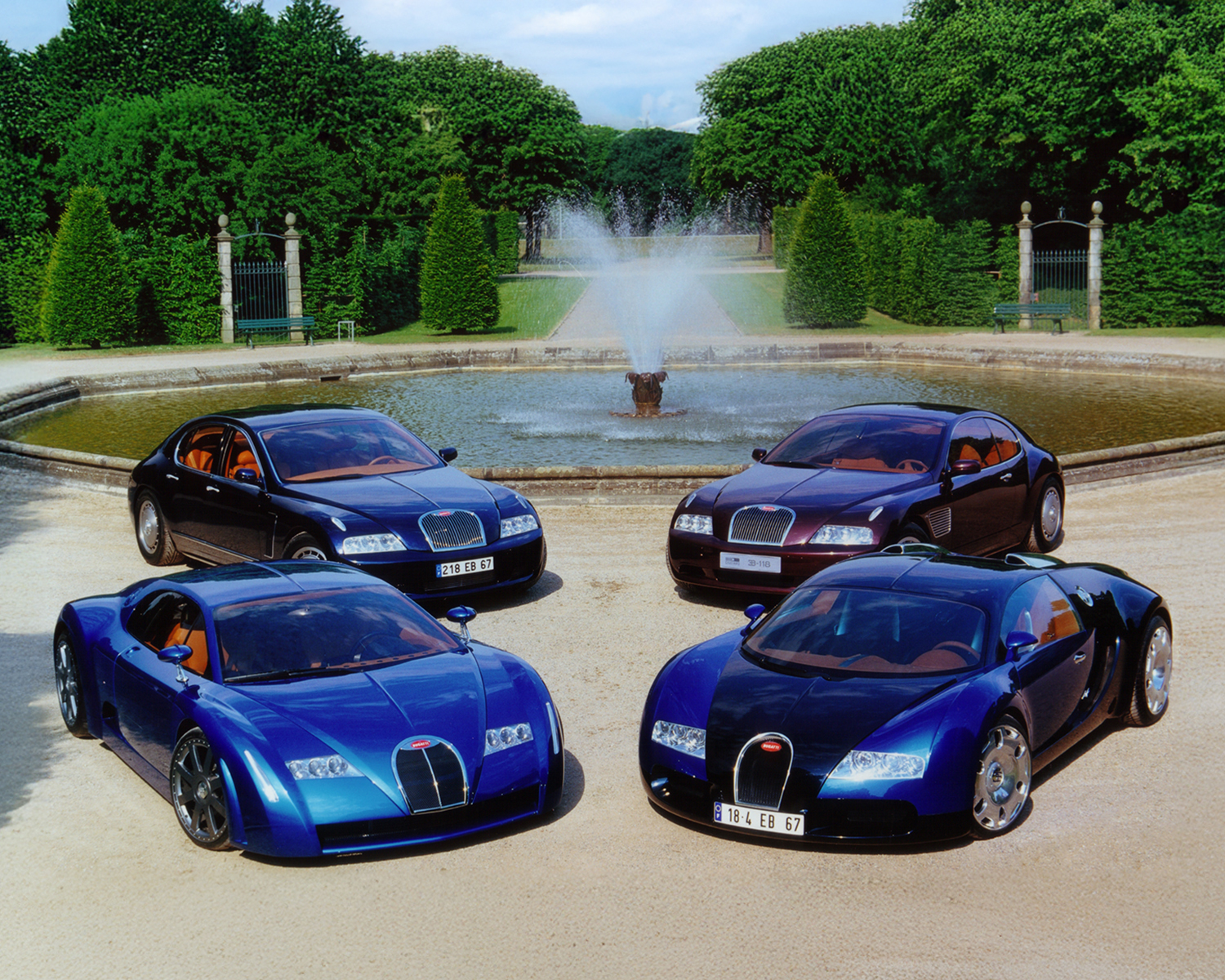
Paris Motor Show 1998 · by Giugiaro. A grand tourer with a 6.3-litre W18 and 555 PS, Art Deco cabin.
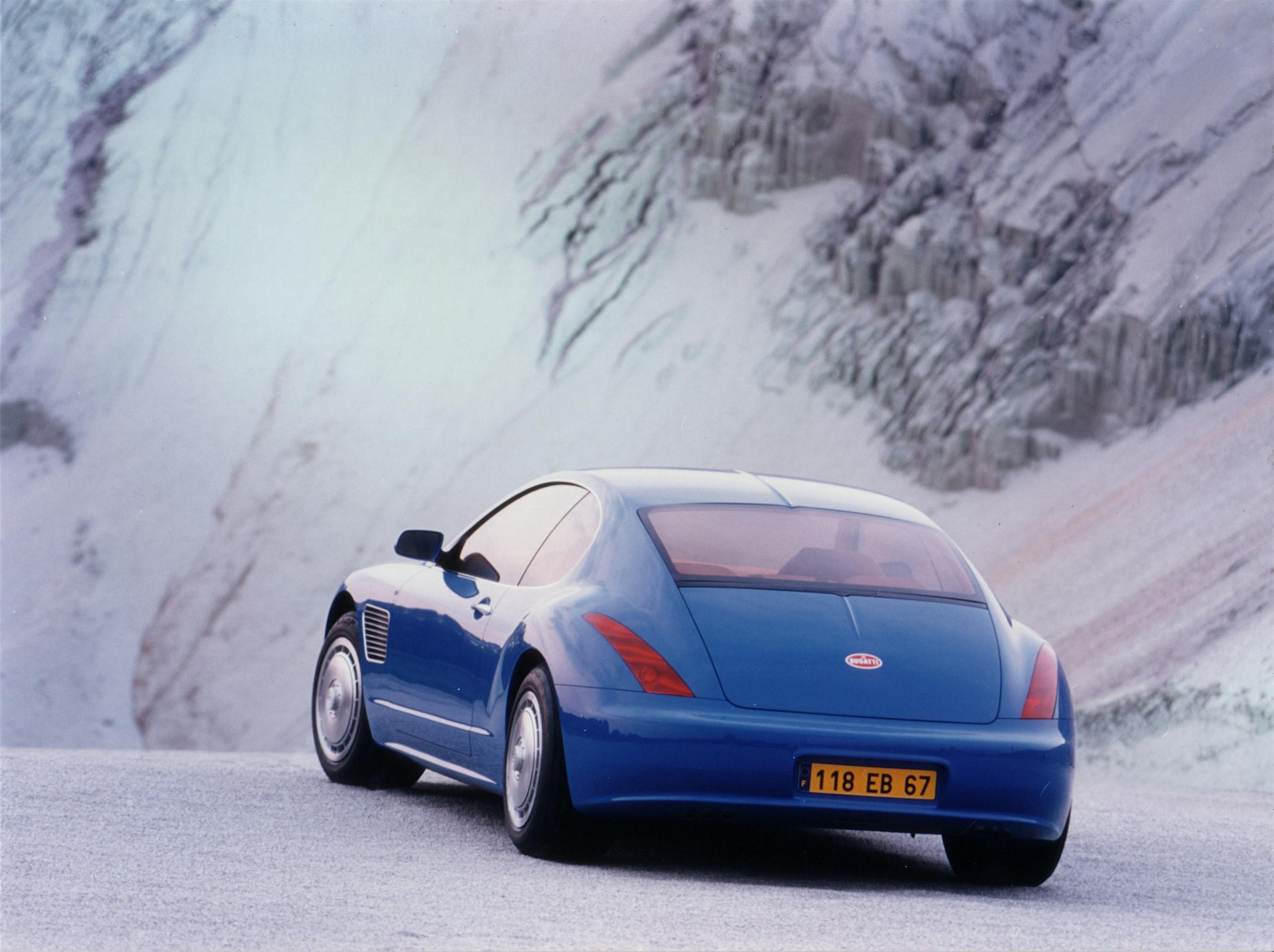
Geneva 1999 · a four-door saloon with the same W18 heart — another facet of Bugatti.
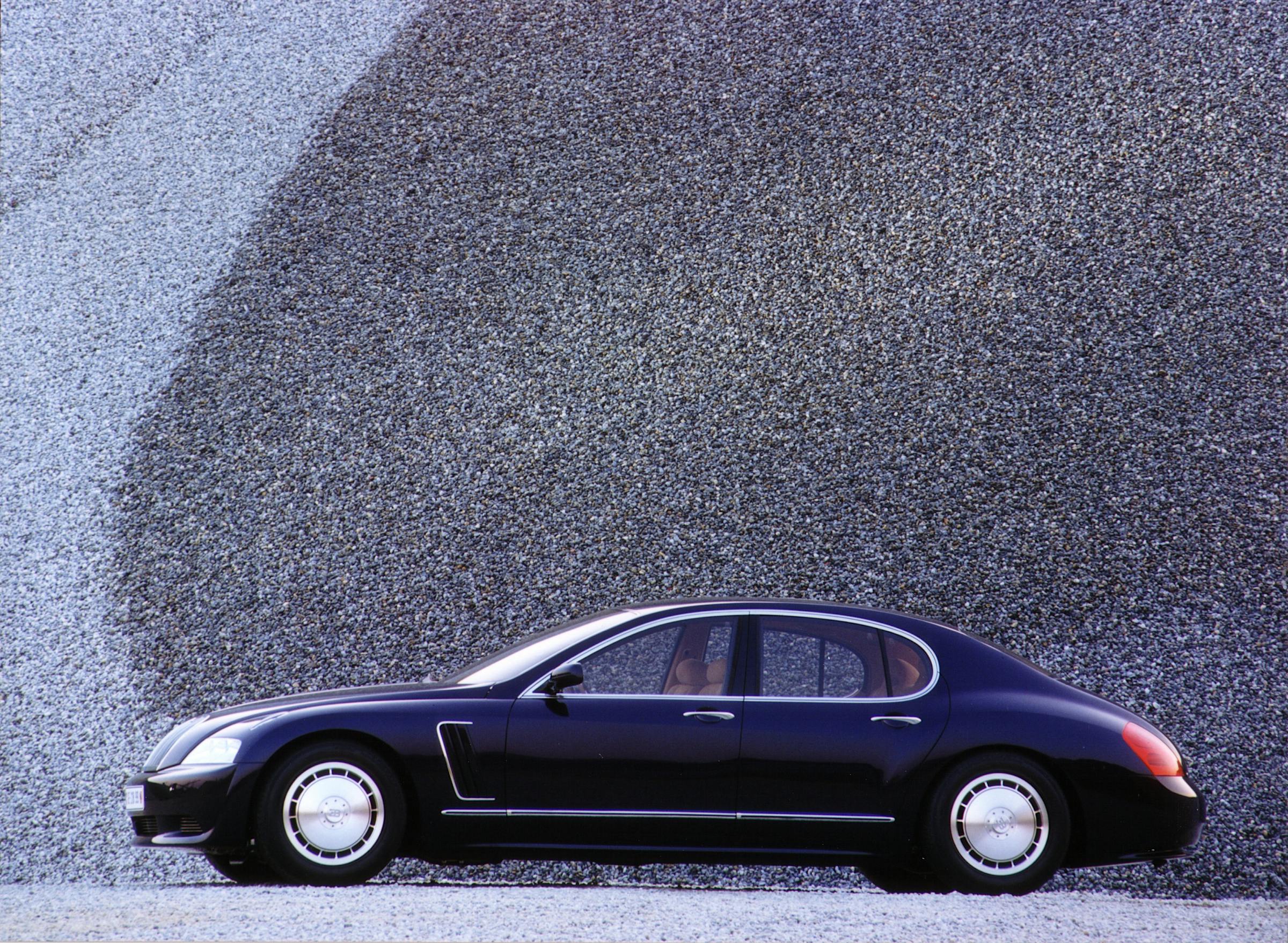
IAA Frankfurt 1999 · the first step towards a super sports car — the name Chiron was born here.
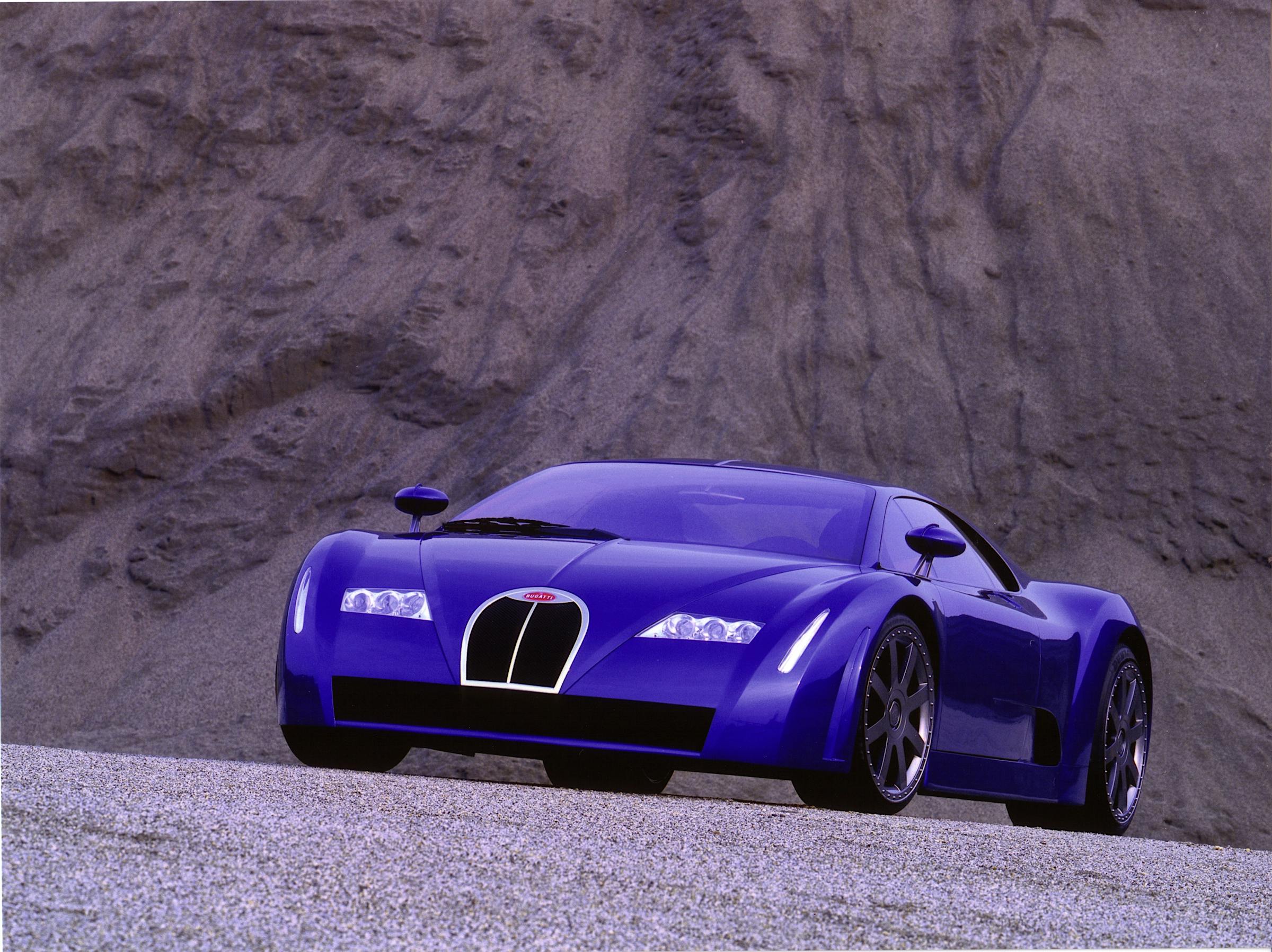
Tokyo 1999 · under Jozef Kabaň, the Veyron name and production direction were set.
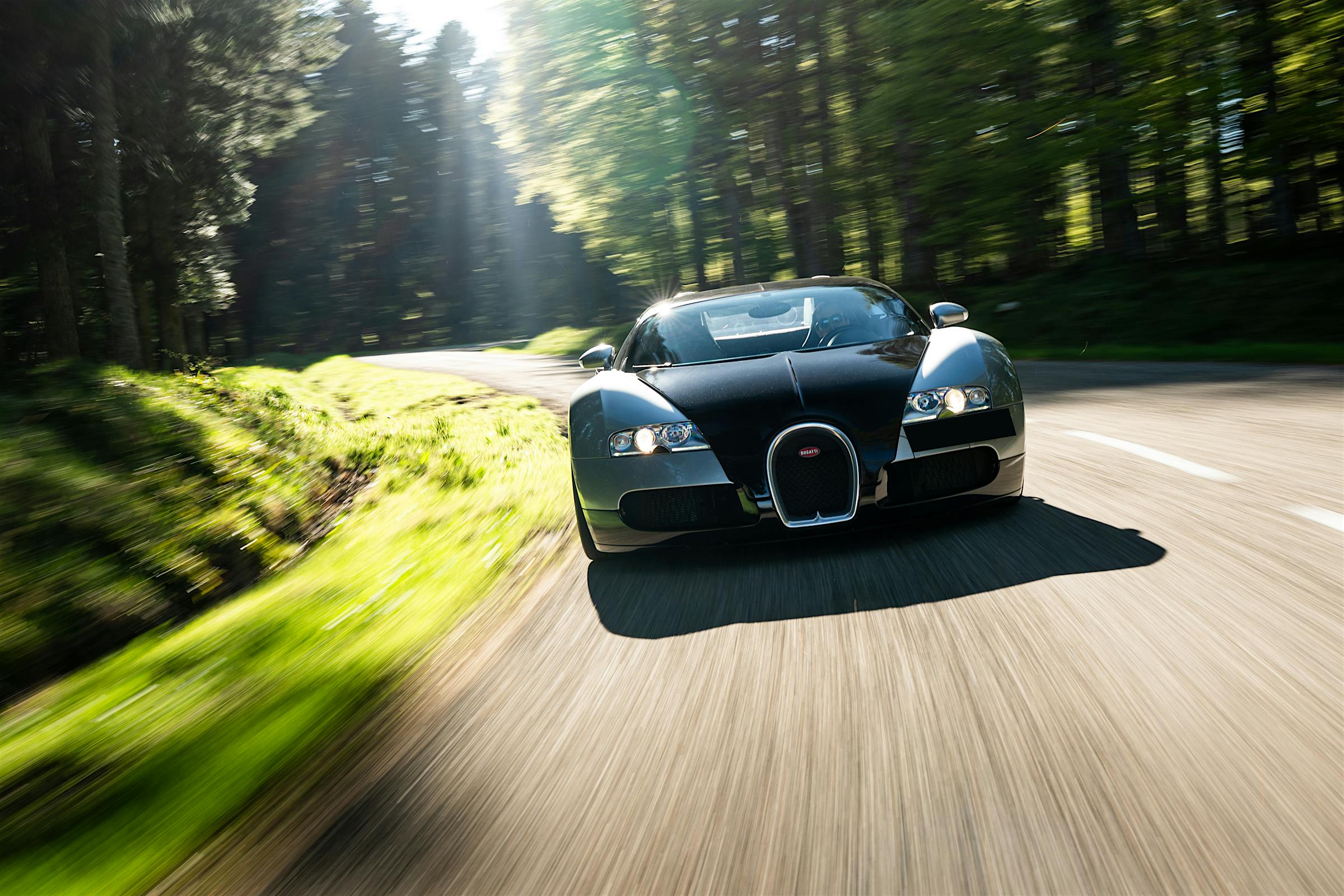
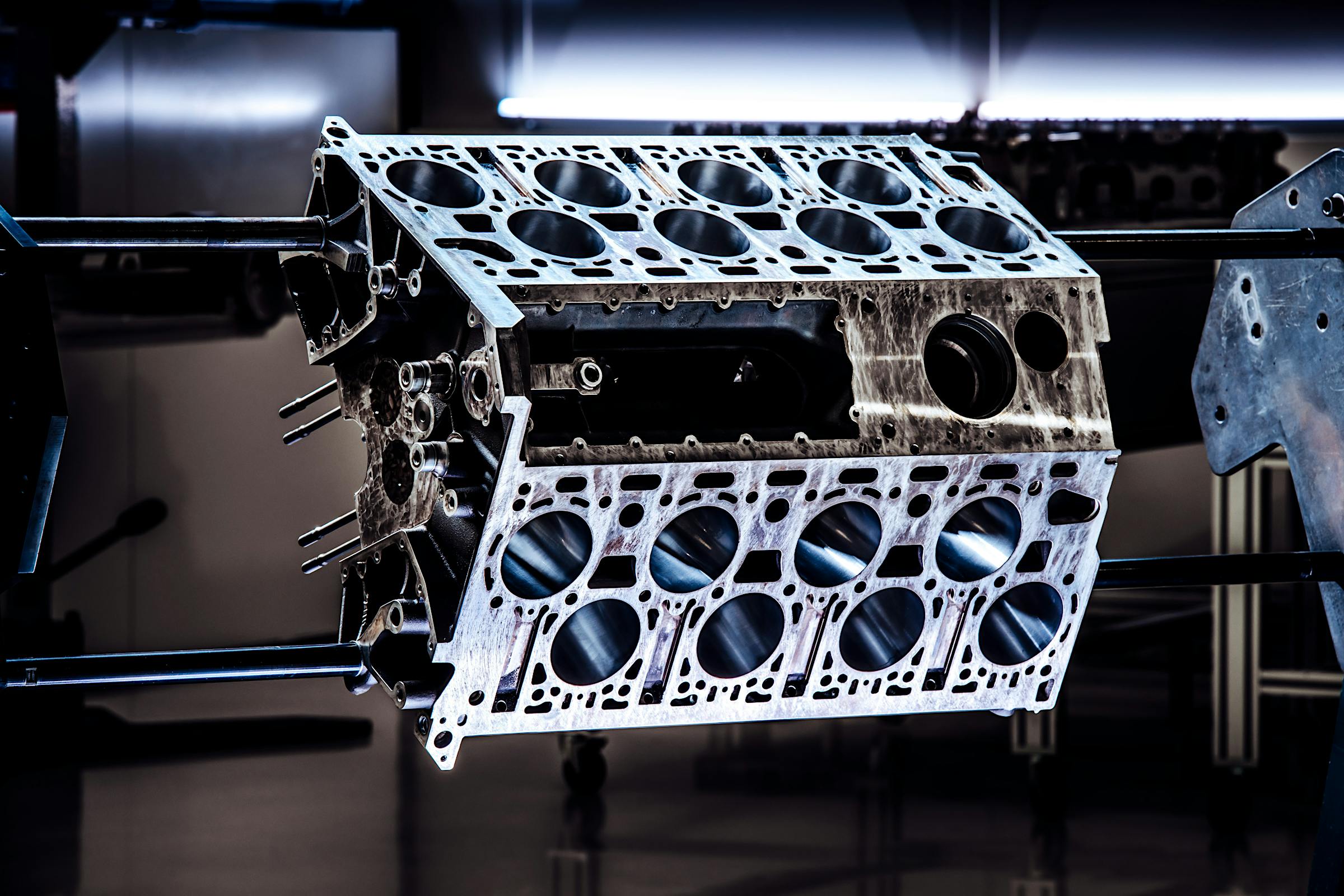
8.0 litres, 16 cylinders, four turbochargers — more than 3,500 parts, all assembled by hand. At its first firing in 2001, it delivered 1,000+1 PS.
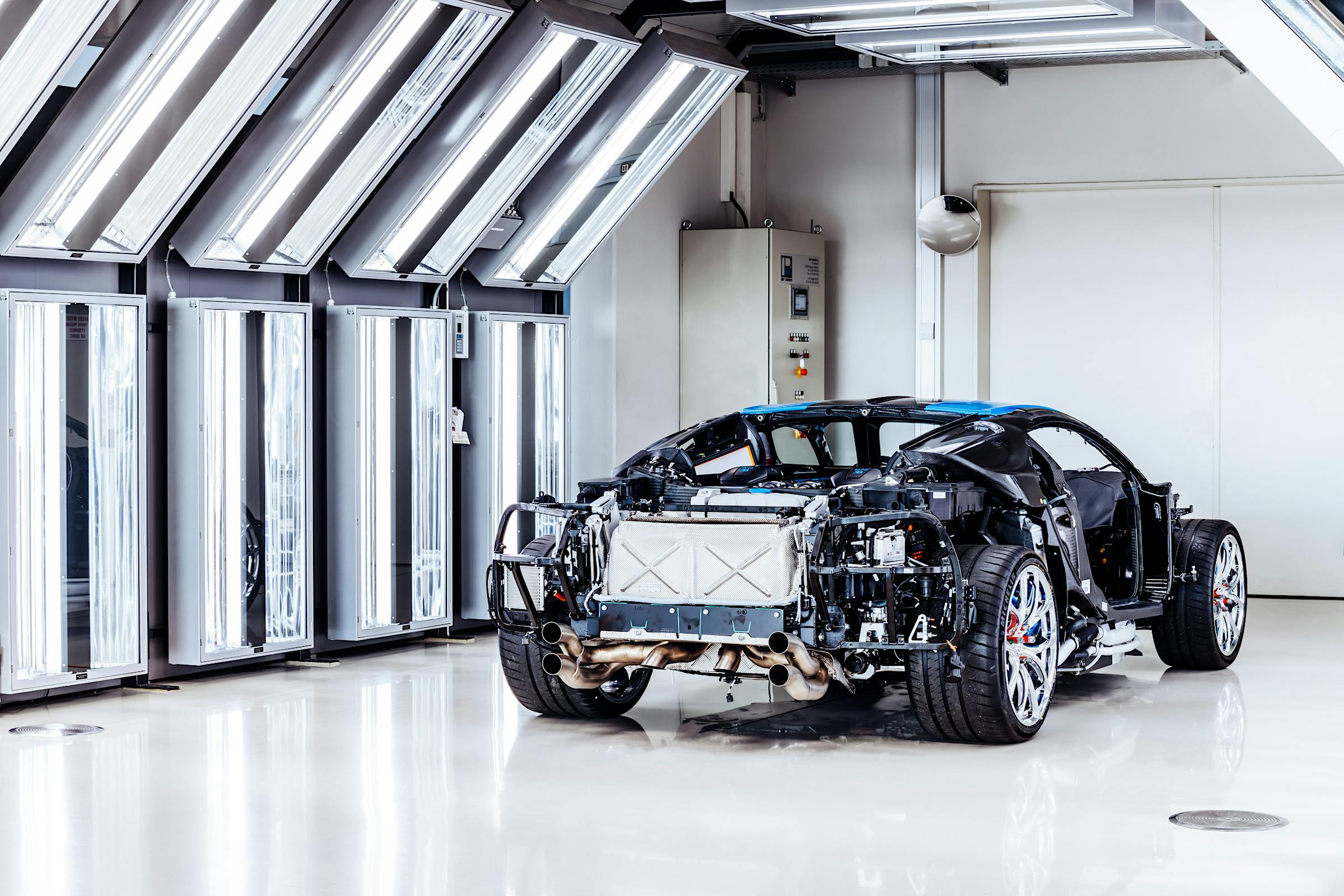
At its first firing in 2001 it delivered 1,000+1 PS; an asymmetric firing order with 45-degree gaps gives it a sound like no other; Ion Current Sensing monitors each cylinder — every detail is designed for reliability and extremes.
The specification gave the developers just four goals: transfer more than 1,000 PS to the road, drive faster than 400 km/h, accelerate from 0–100 km/h in under 3 seconds — and, the biggest challenge, in this configuration still be suitable for driving "to the opera" in comfort and style. A carbon-fibre monocoque of about 110 kg, a front structure of only 34 kg — eight years to turn four goals into one car.
Two eight-cylinder banks in a W arrangement — compact enough to be no bigger than a V12. 8.0 litres, four turbochargers.
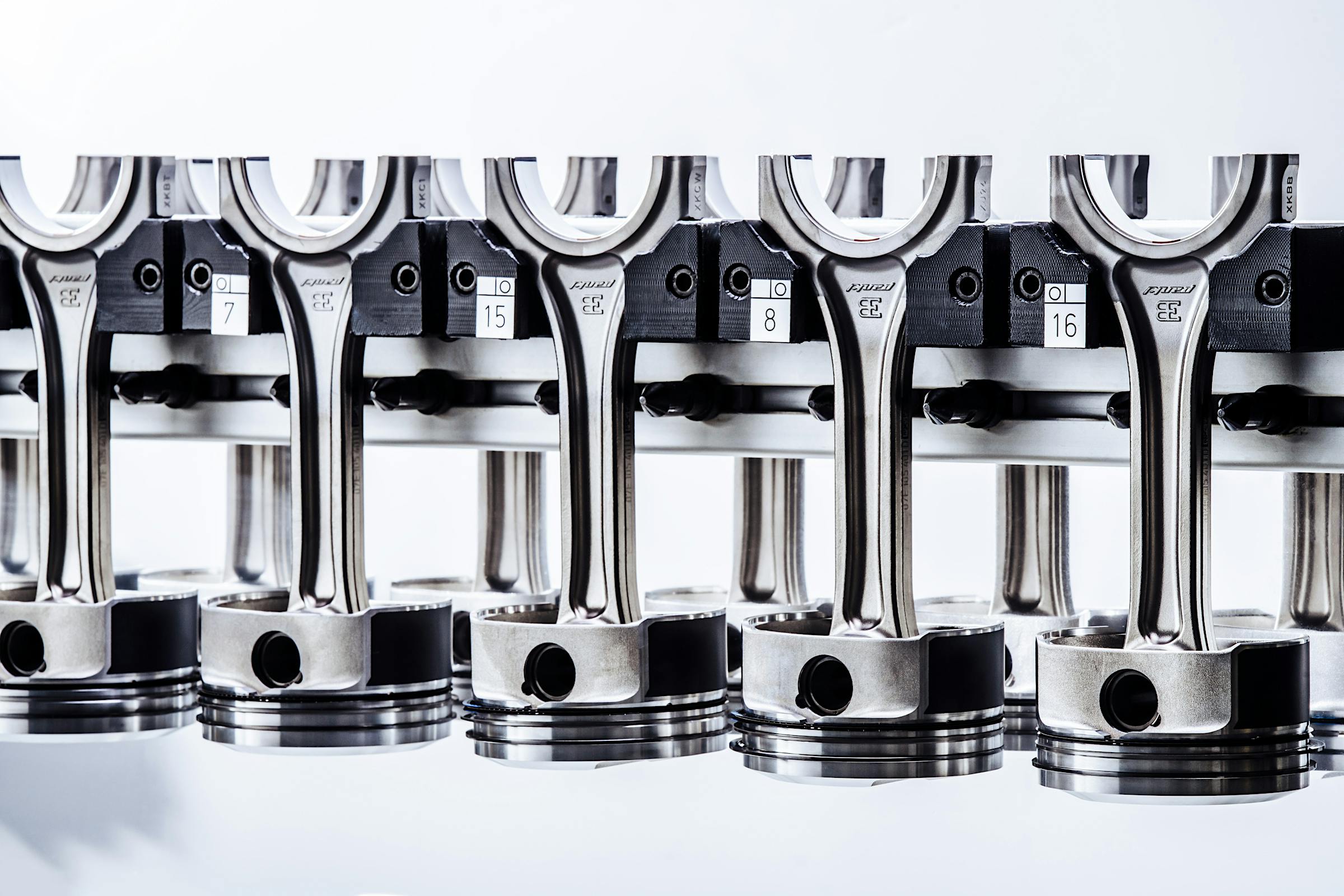
Every connecting rod and piston is forged and weighed — the hand assembly of 3,500+ parts begins with them.
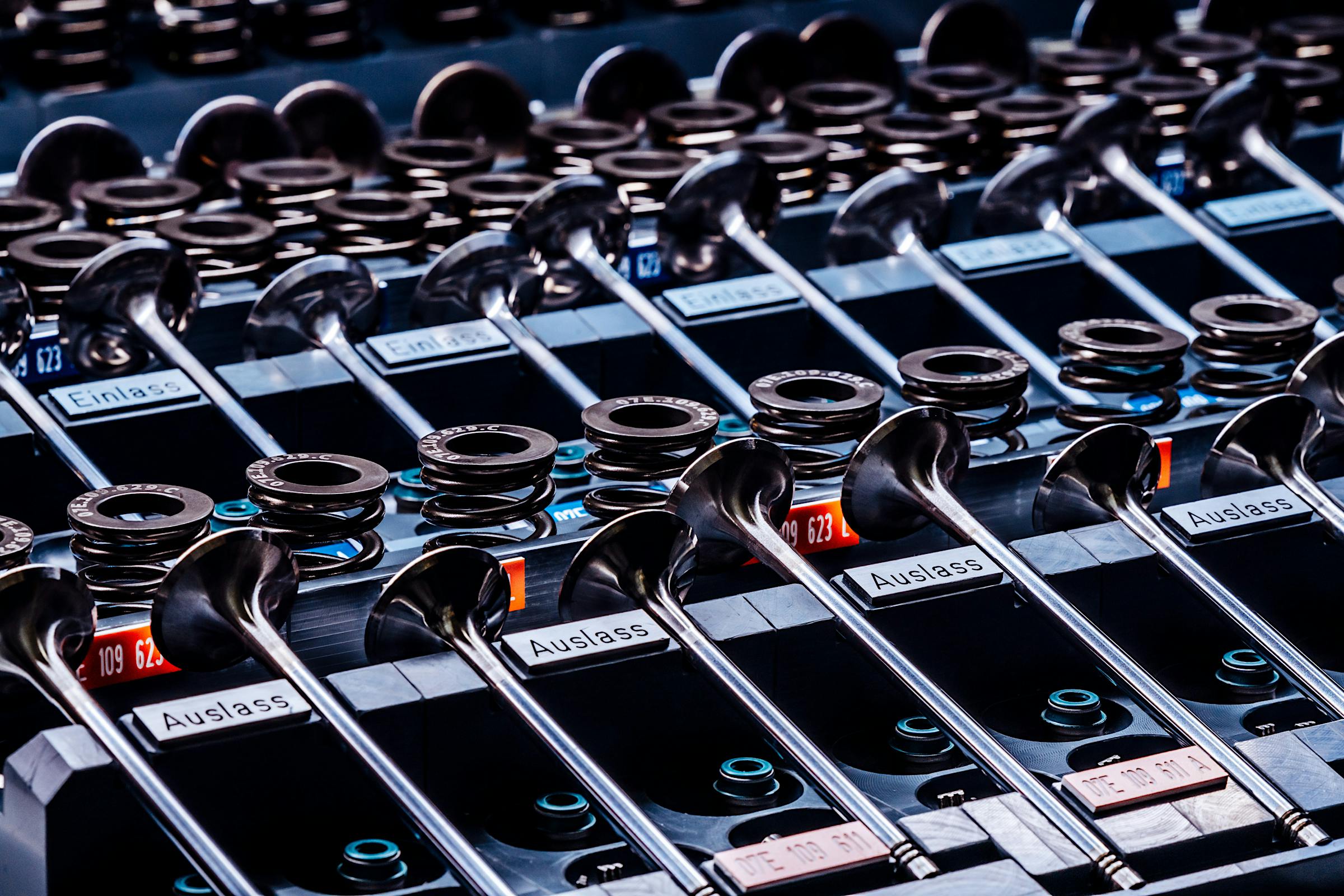
Intake valves, exhaust valves and springs are matched and fitted by hand — precision is the price of reliability.
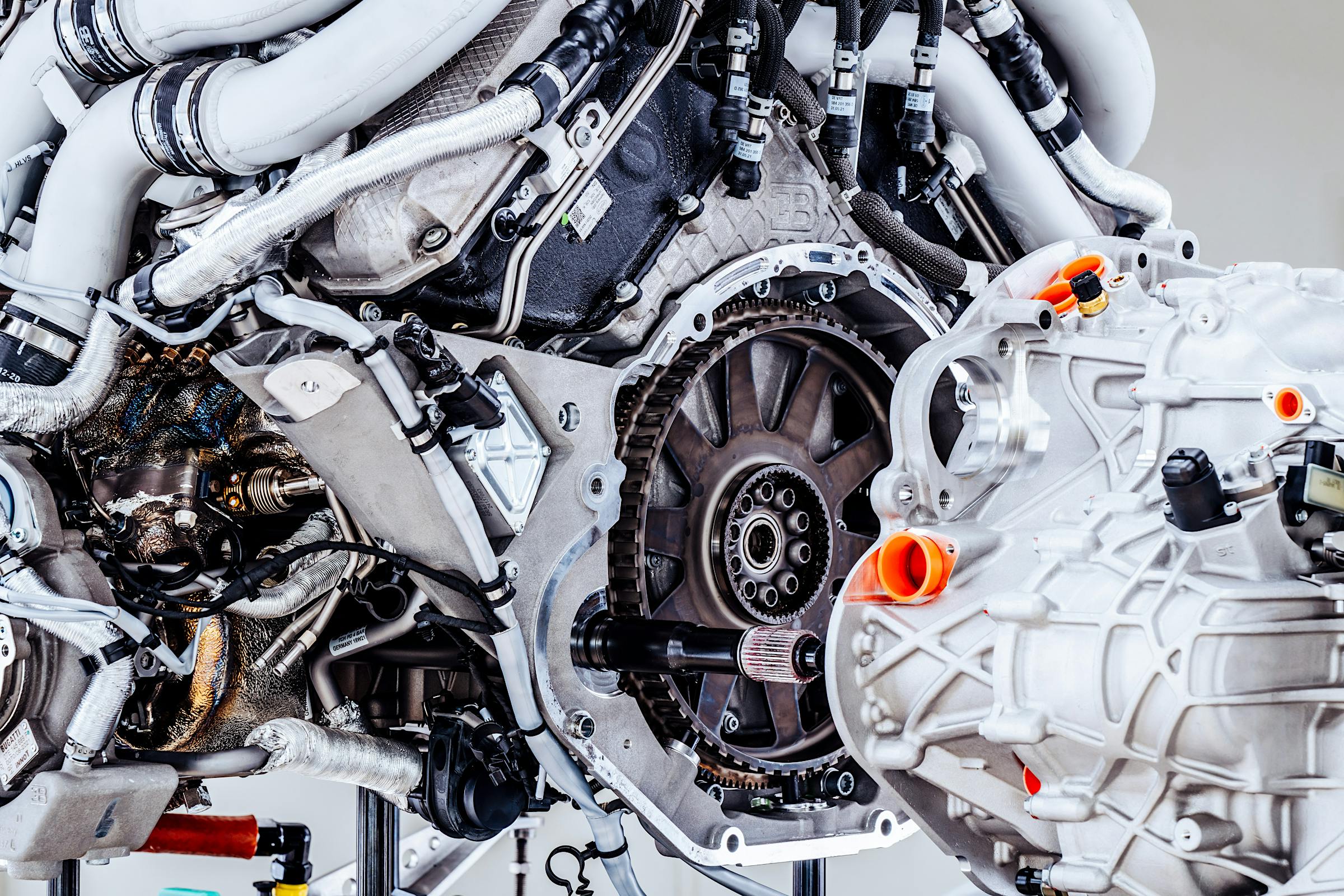
The 8.0-litre W16 and the 7-speed DSG are married at the Atelier in Molsheim — a dry-sump design keeps the centre of gravity low.
Gear changes without interrupting power — 1,250 Nm is carried smoothly, all-wheel drive sending it to all four wheels.
The first full carbon-fibre monocoque in a production car — about 110 kg, torsional rigidity of 60,000 Nm per degree. The passenger cell is a survival cell.
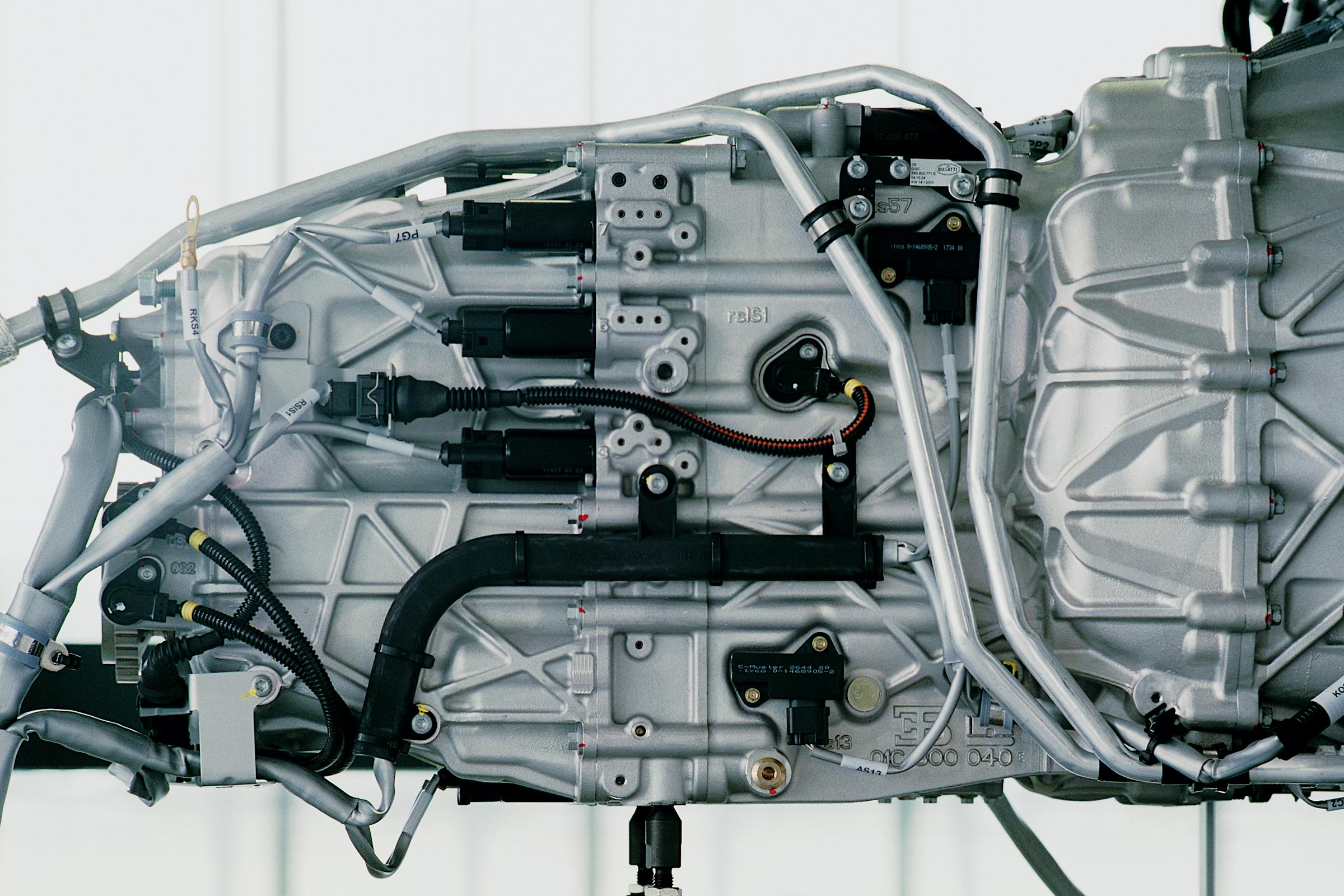
From Michelin's Ladoux to Ehra-Lessien — in heat, on ice and on high-speed ovals, the Veyron was validated until it was ready for any driver.
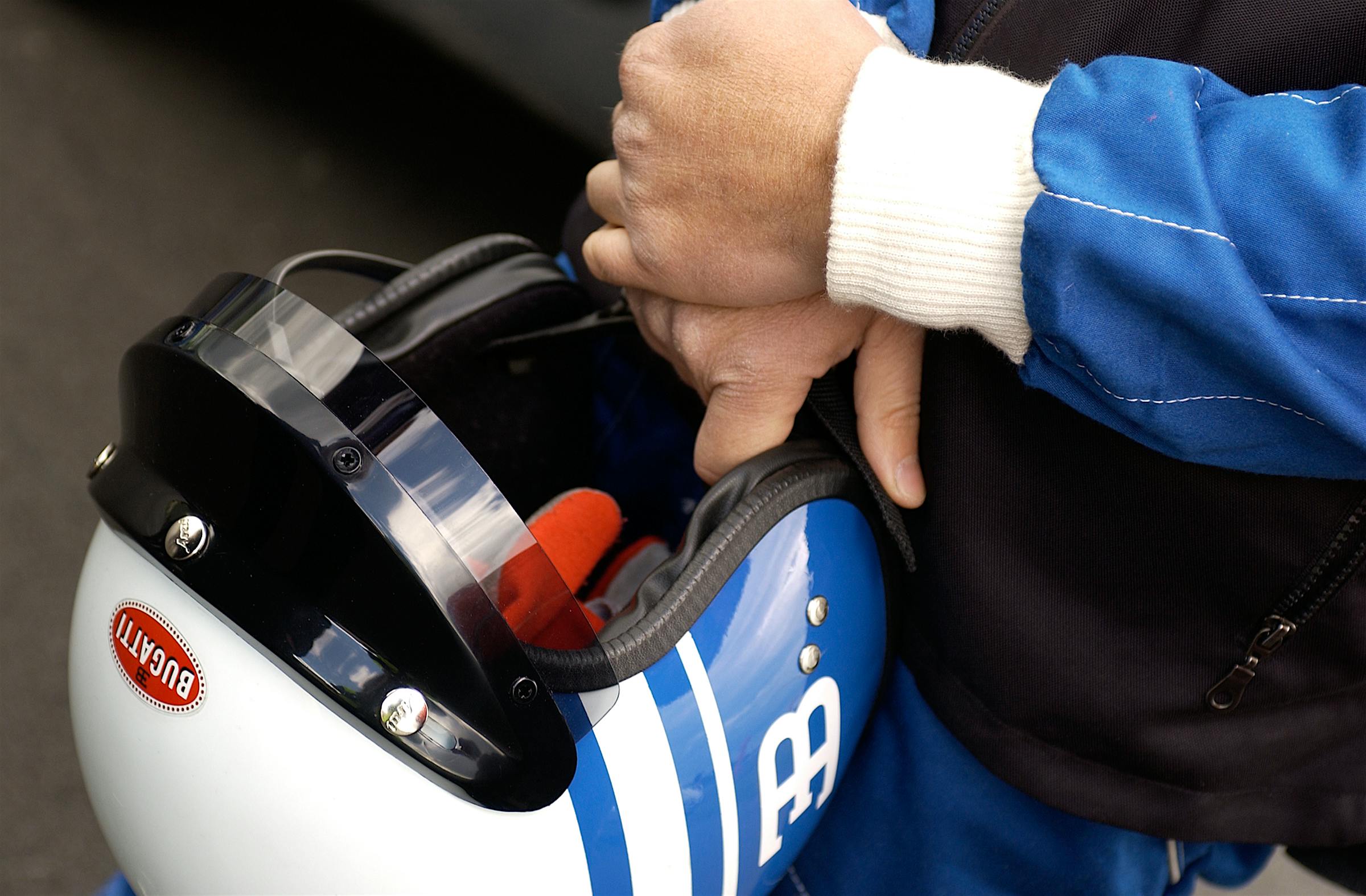
In 2001, a phone call changed Loris Bicocchi's career — the first drive took place at Michelin's Ladoux test track, in a red-and-black prototype. At the time, the Veyron delivered twice the power of any other production car; there was no reference point, and everything had to be rebuilt from scratch.
Every engine is rigorously validated on the test bench — 16 cylinders, 1,000+ PS.
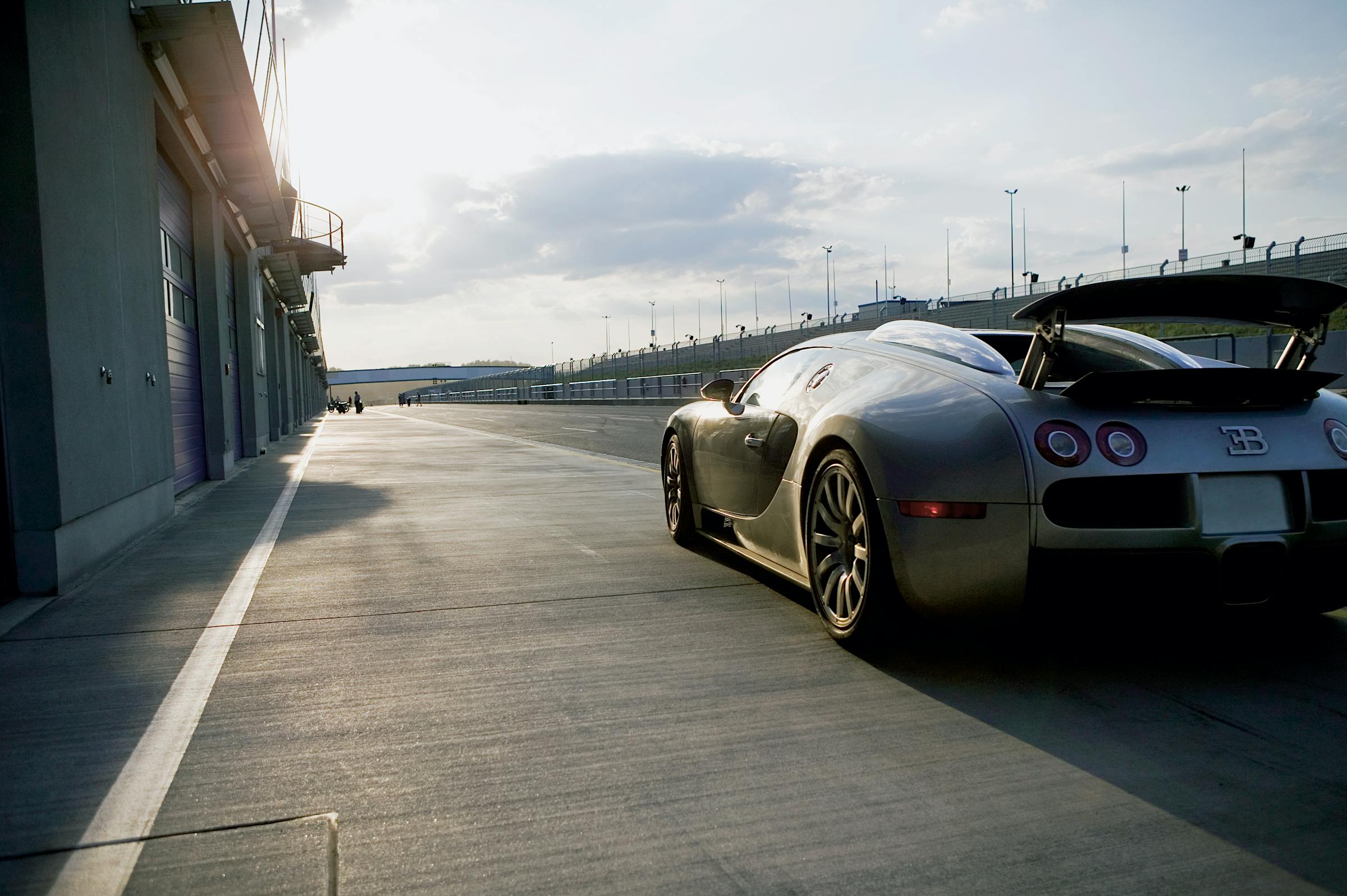
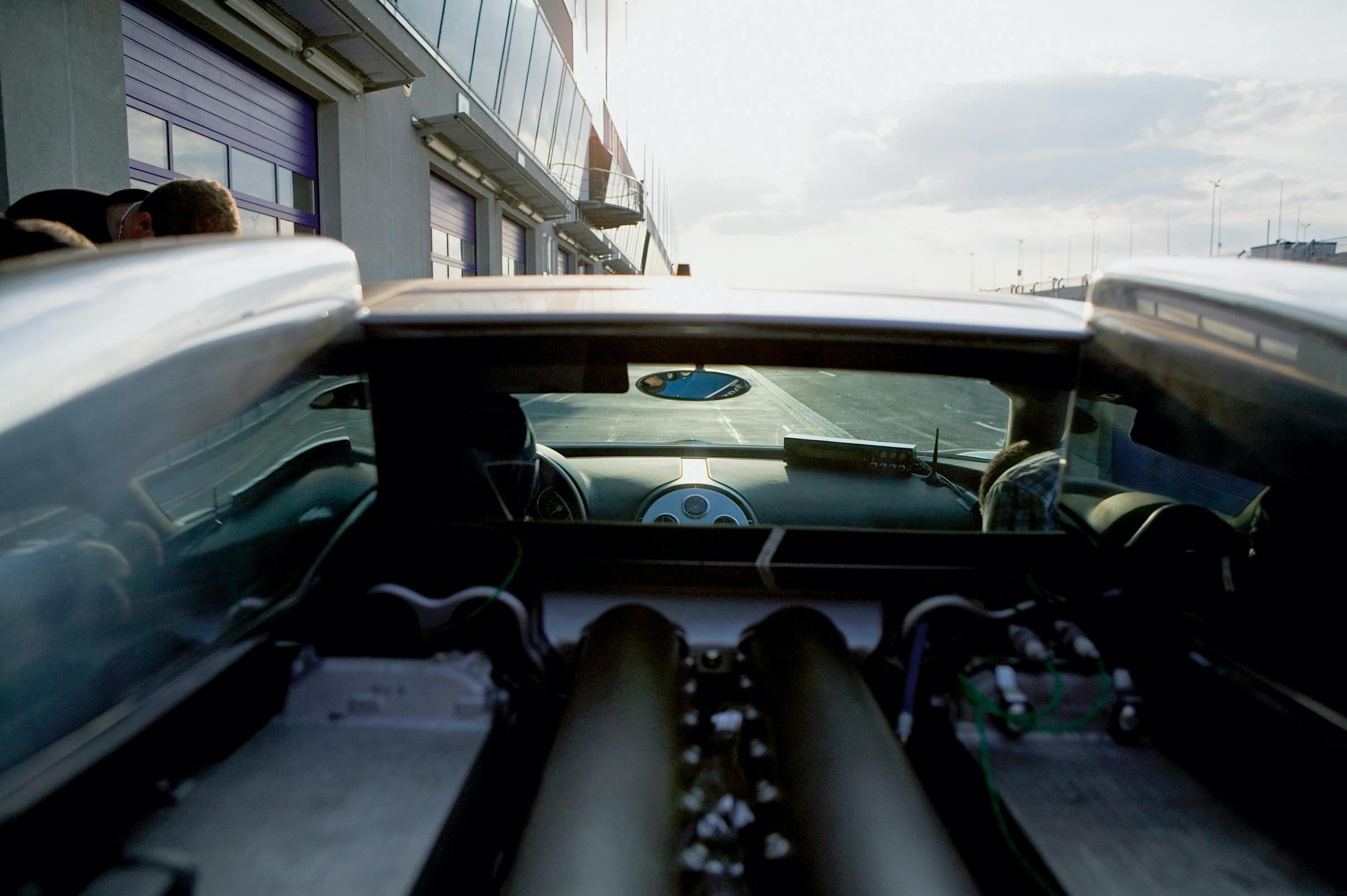
Engineers and drivers push every component to its limit on tracks and high-speed ovals.
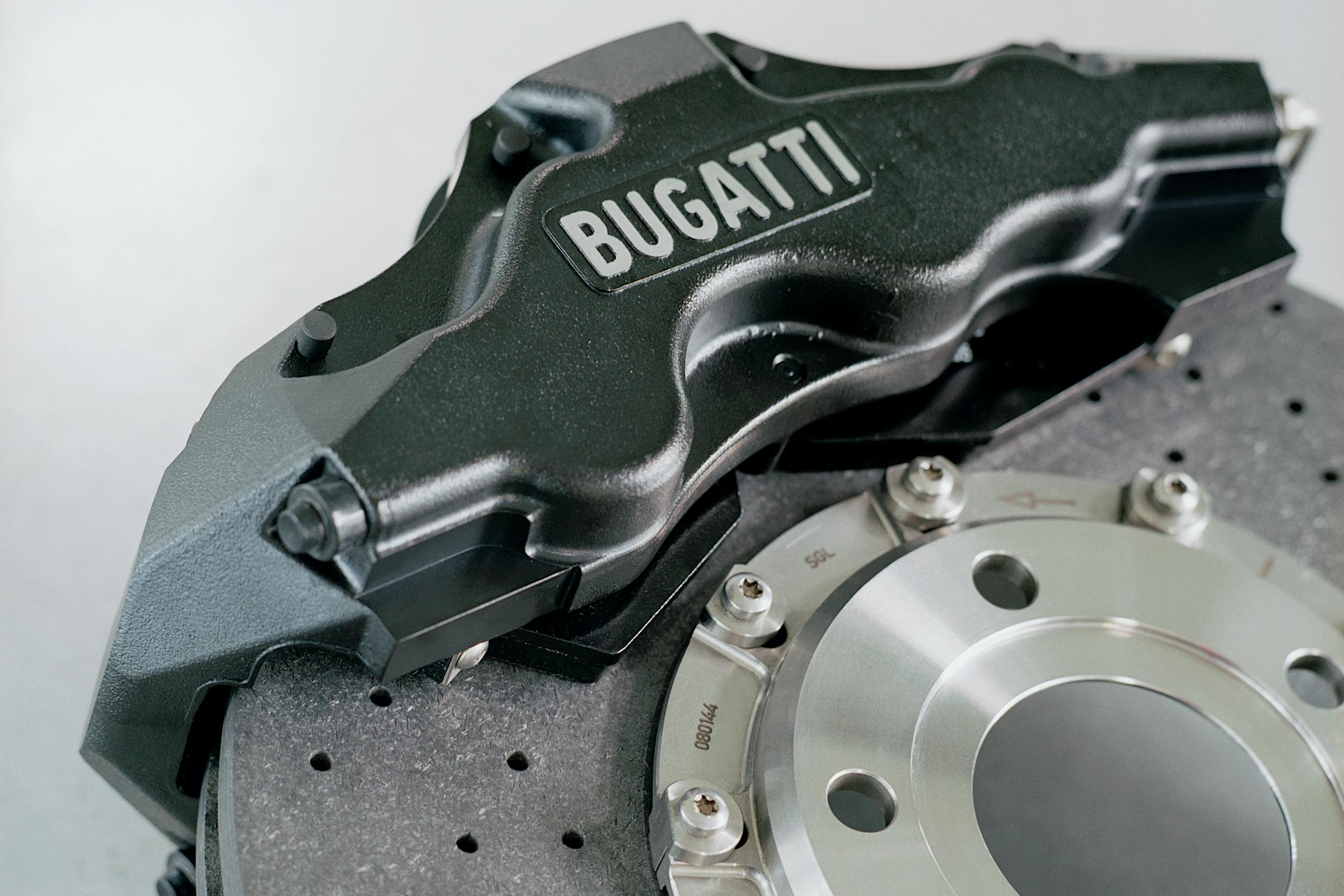
Carbon-ceramic discs and eight-piston calipers — the power to stop from 407 km/h.
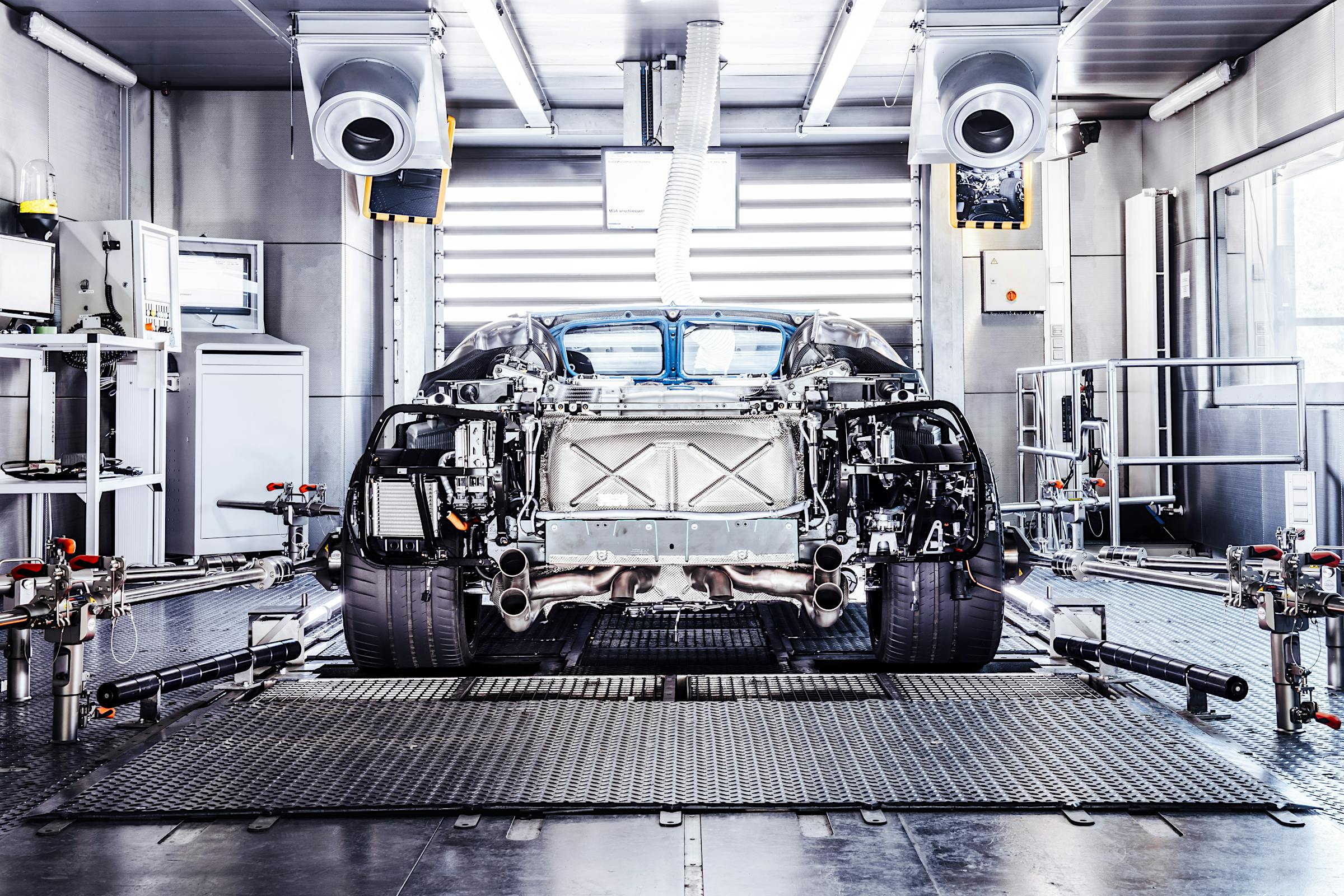
A dynamometer that simulates 400+ km/h — only the Veyron can push it to the limit.
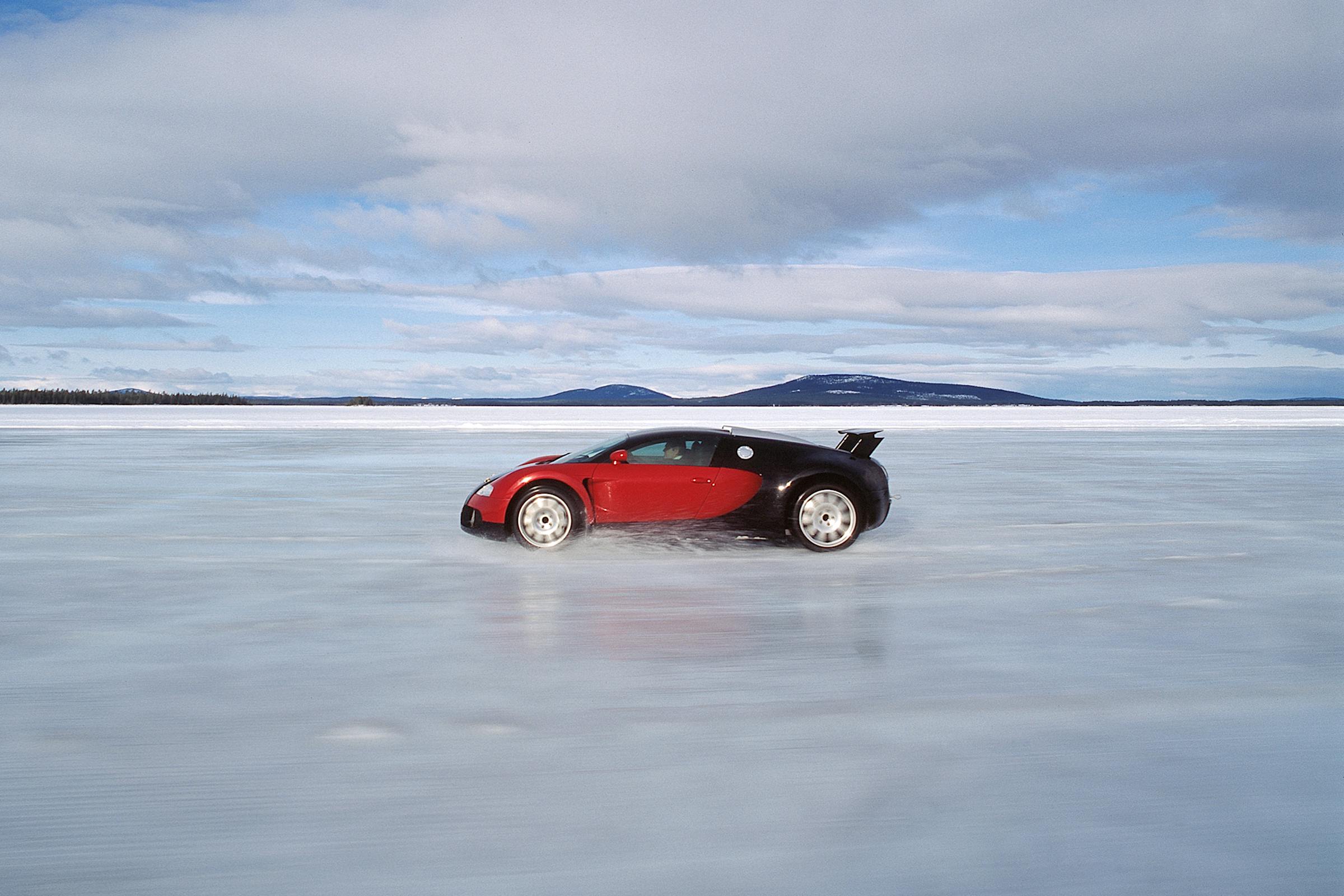
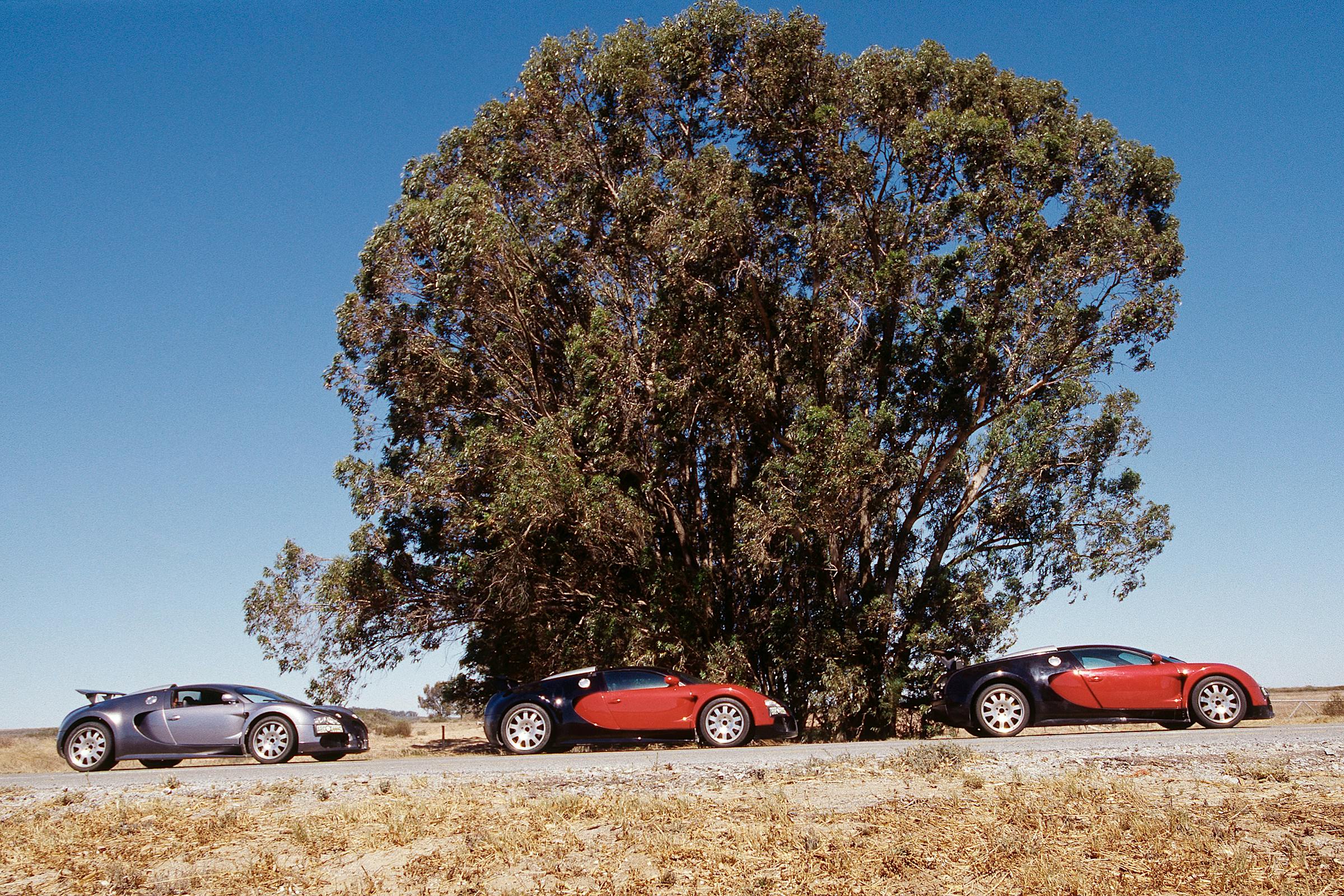
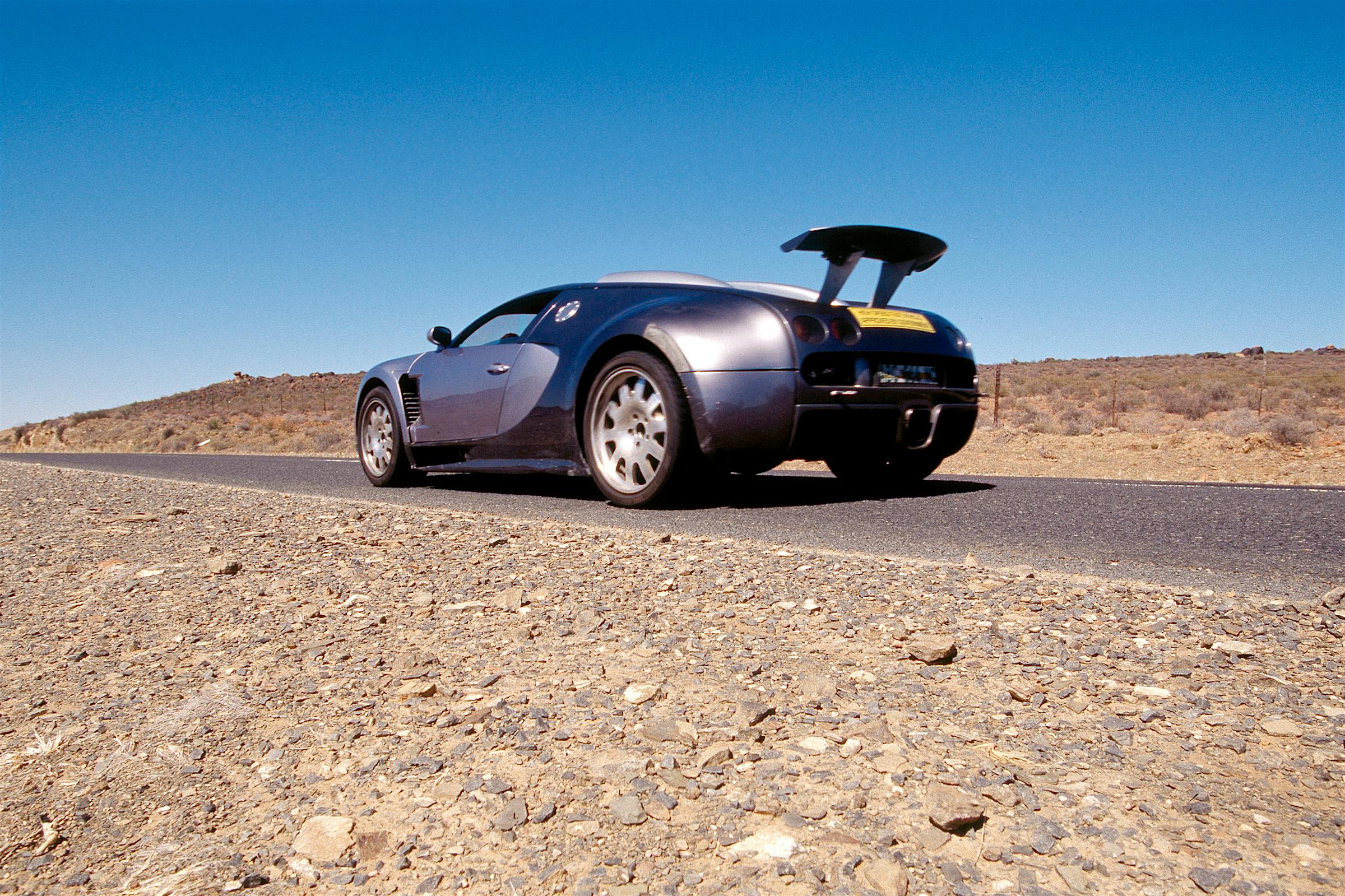
On 19 April 2005, a production car broke the 400 km/h barrier for the first time; over the following decade, the record was rewritten again and again — by the Veyron itself.
Test driver Uwe Novacki took the Veyron 16.4 down the high-speed straight at Ehra-Lessien and reached 407 km/h — the first time a production car had broken the 400 km/h barrier.
We expected an average value of 425 km/h — but today the conditions were perfect and allowed even more.
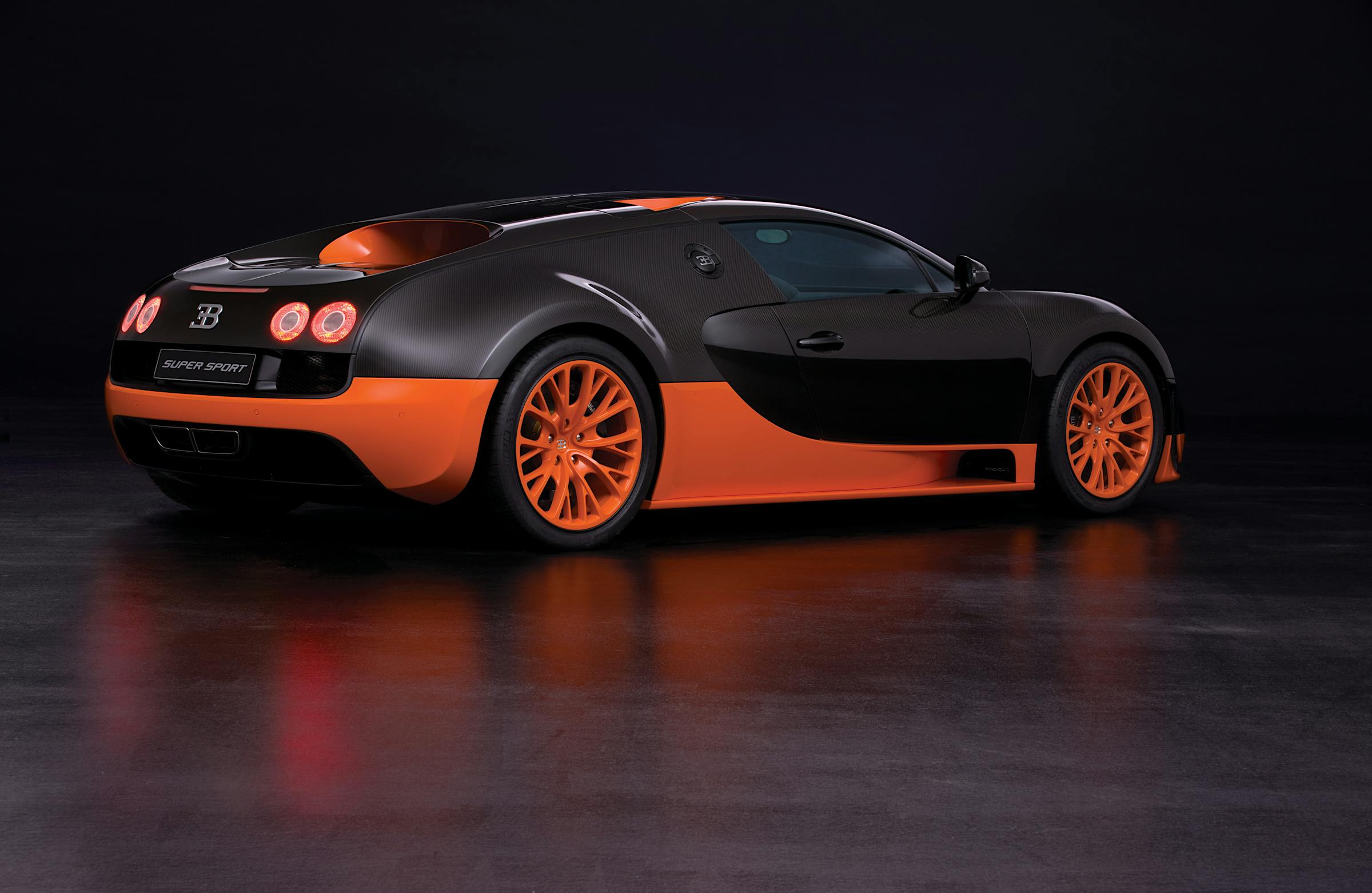
Larger turbochargers, new intercoolers, NACA roof intakes and a new fibre structure for the carbon monocoque — on 4 July 2010, Pierre-Henri Raphanel averaged 431.072 km/h at Ehra-Lessien: the Guinness-certified world record for a production car.
1,200 PS and 1,500 Nm, a reinforced drivetrain and race-derived dampers; in April 2013, Anthony Liu drove the black-and-orange record car to 408.84 km/h — the world record for an open-top production car, unbeaten to this day.
407 KM/H · 2005
Volkswagen's chief driving safety instructor — the first man to take a production car past 400 km/h.
431.072 KM/H · 2010
Bugatti Pilote Officiel — set the production-car world record in the Super Sport.
408.84 KM/H · 2013
The 29-year-old Chinese entrepreneur and racing driver — set the open-top production record.
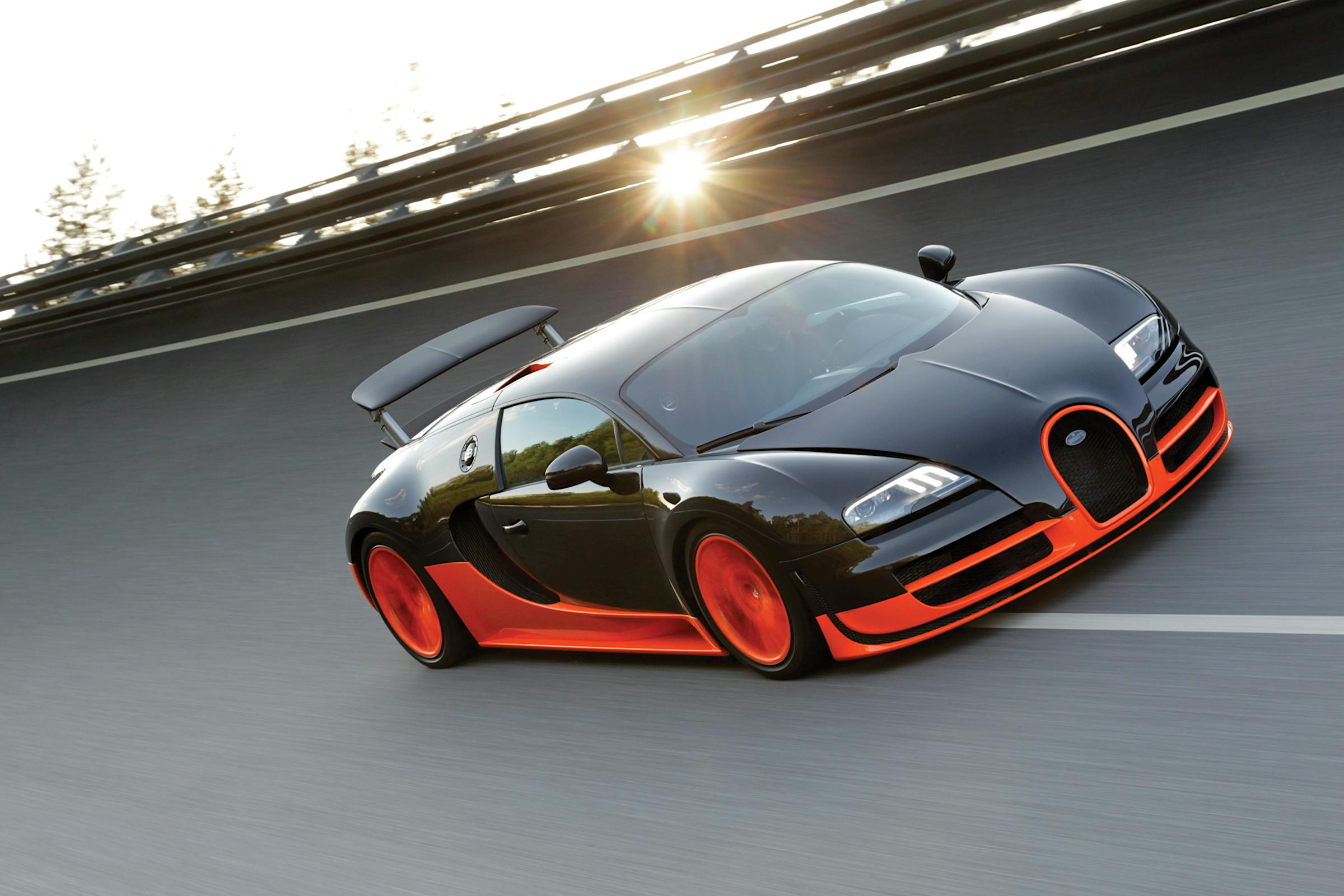
From Pierre Veyron, Le Mans winner of 1939, to the Veyron 16.4 of 2005 — speed and glory, in one line.
407 → 431.072 → 408.84 → 490.484 — the production-car record baton never touched the ground.
450 cars scattered across the globe — each one a witness to its era.
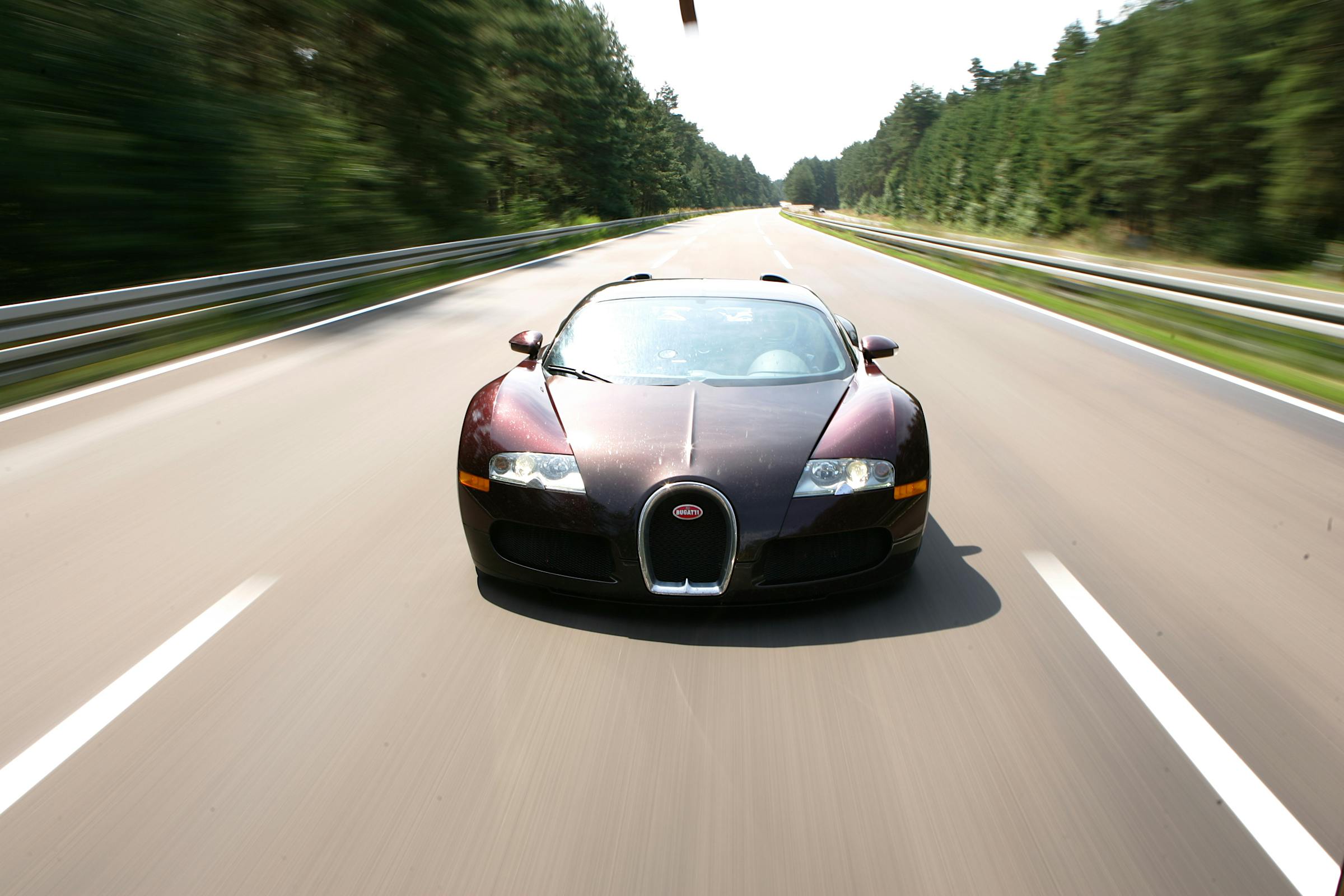
From the bare carbon of the Pur Sang to the porcelain of the L'Or Blanc — with the Veyron, bespoke is the norm: 450 cars, no two alike.
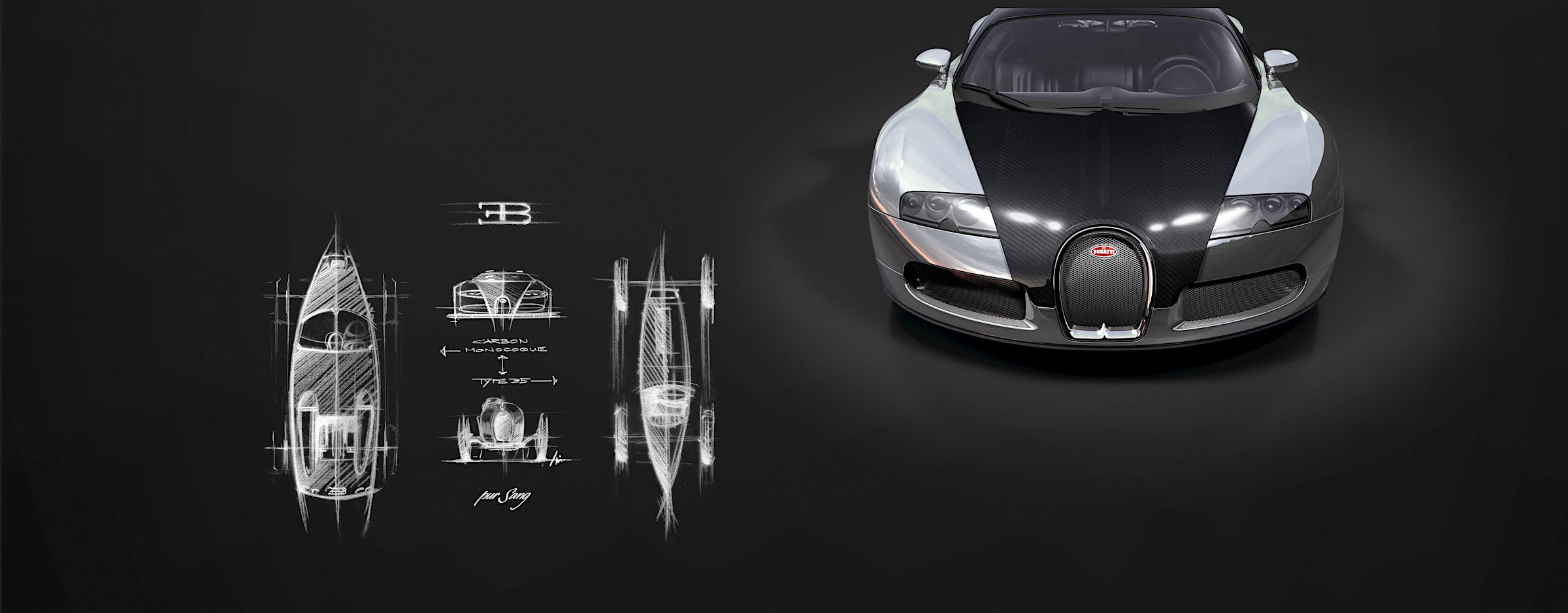
All paint removed, the weave of visible carbon fibre laid bare — five cars, the Veyron's answer to "material is design." Anscheidt: "Looking back on the Pur Sang is like remembering the birth of your first child."
The Sang Noir (2008) paid tribute to the Type 57S Atlantic in all-black with chrome details;
the Grand Sport Venet (2012), created with French artist Bernar Venet — art, on the road.
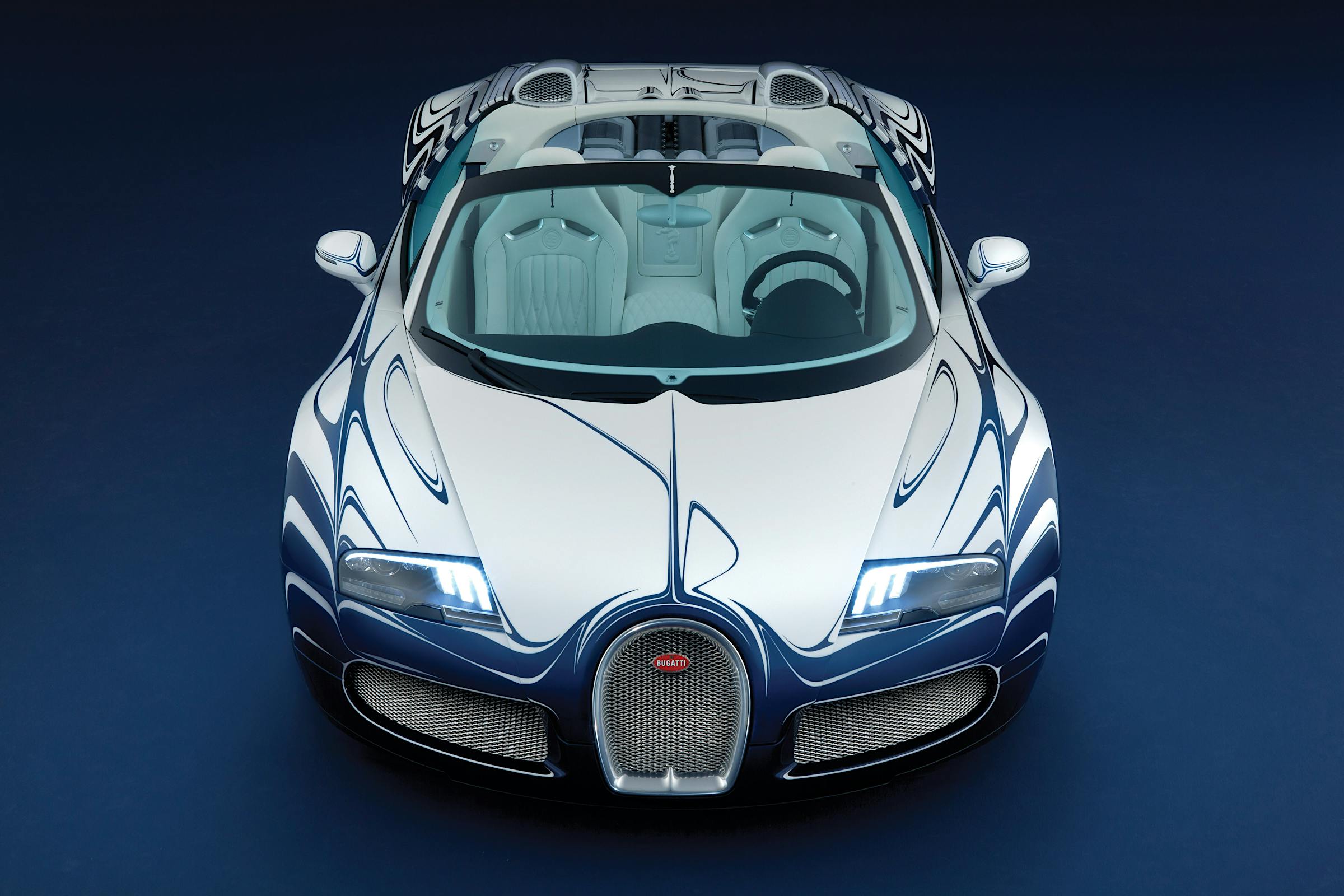
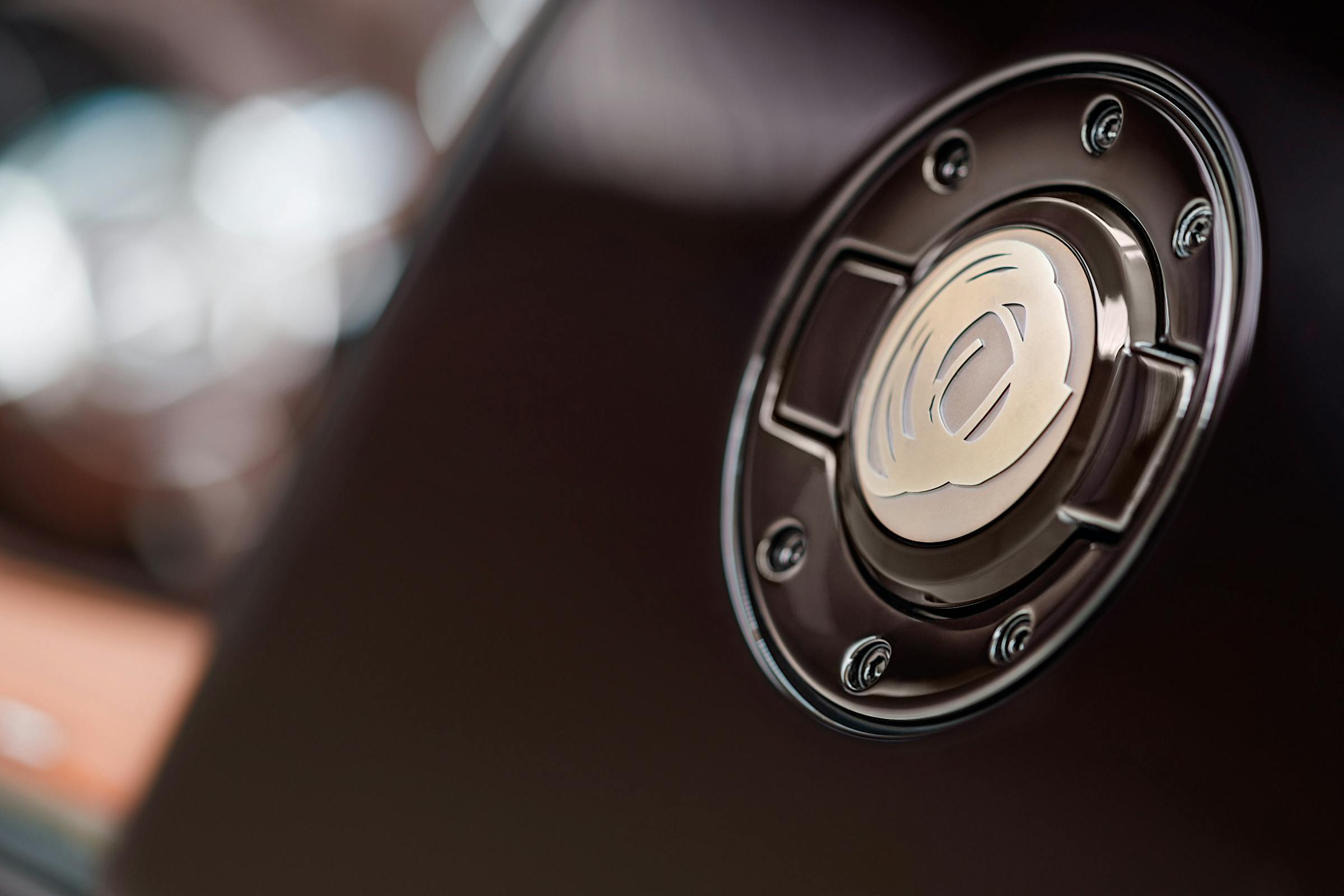
Created with the Königliche Porzellan-Manufaktur (KPM) Berlin: the blue-and-white wave livery was taped out in Japanese tissue paper and hand-painted over three weeks; porcelain adorns the centre wheel badges, fuel and oil caps, the EB badge and the centre console — one of one.
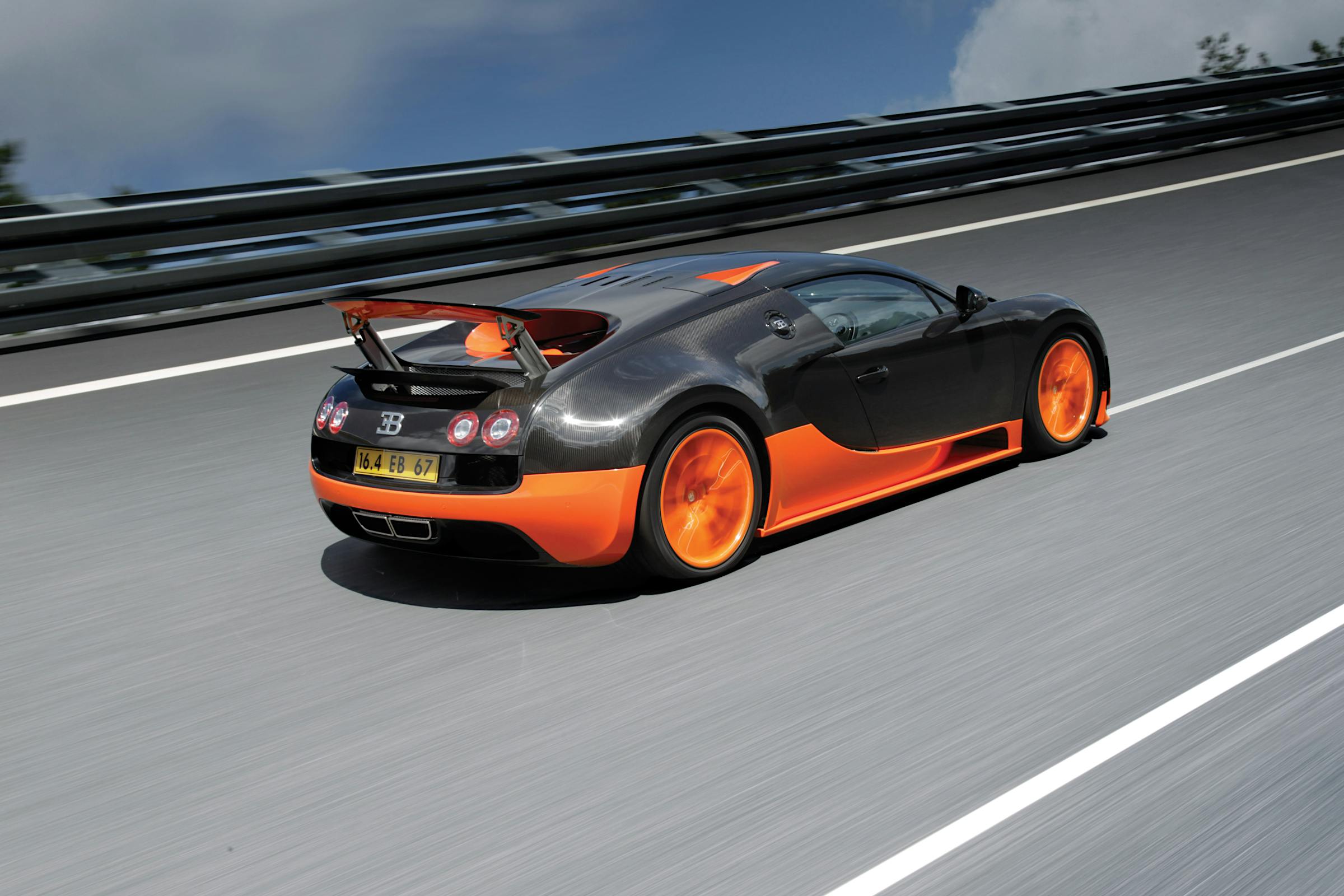
The livery of the 431.072 km/h record car: black visible carbon with Arancia orange. The WRC edition is limited to eight cars at €1.99 million — the record itself, as a collector's piece.
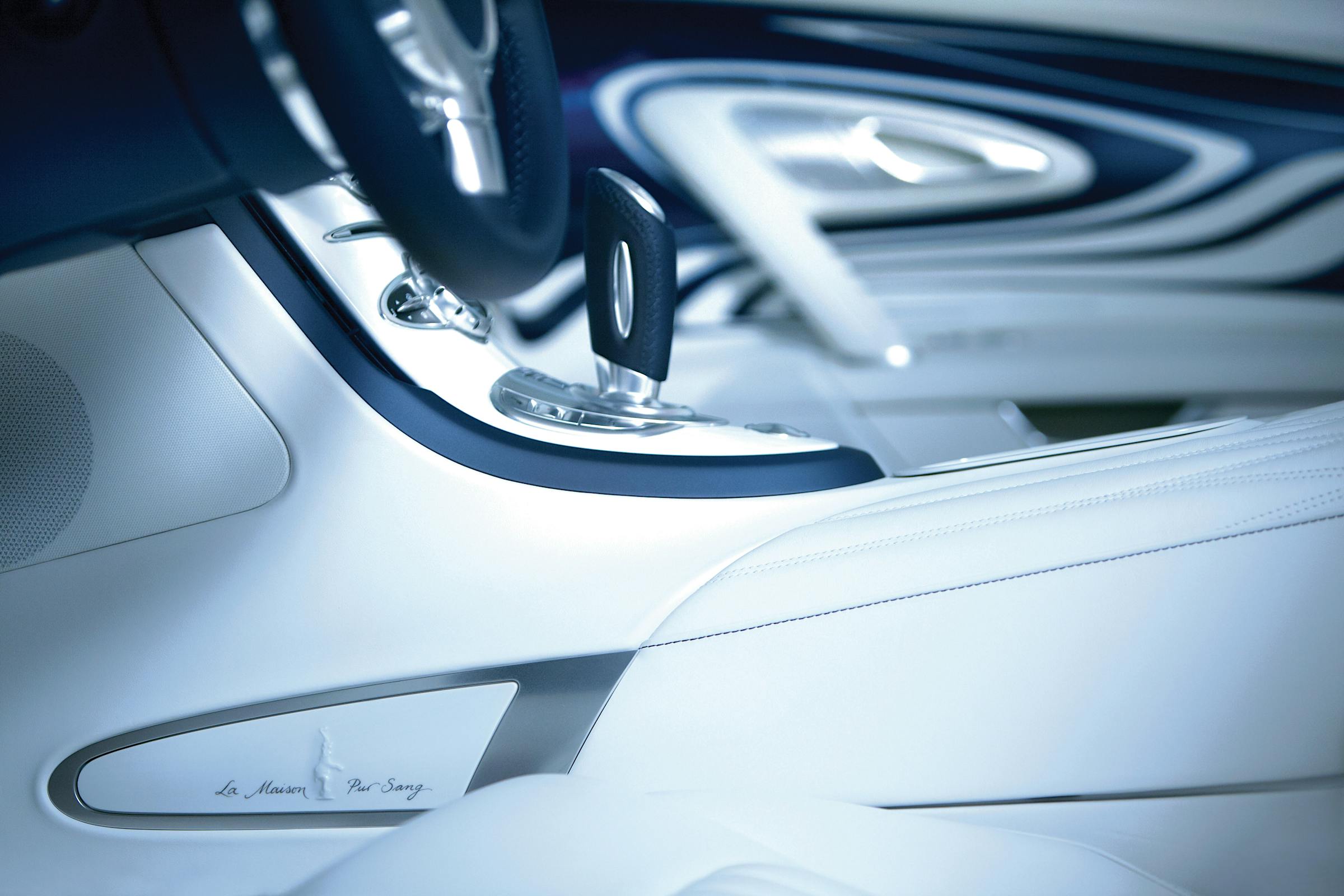
The "La Maison Pur Sang" plaque — the purity of materials, inside and out.
Porcelain echoing the wave livery — 250 years of KPM craft, on the road.
Every badge is a declaration of identity — EB, the Bugatti signature.
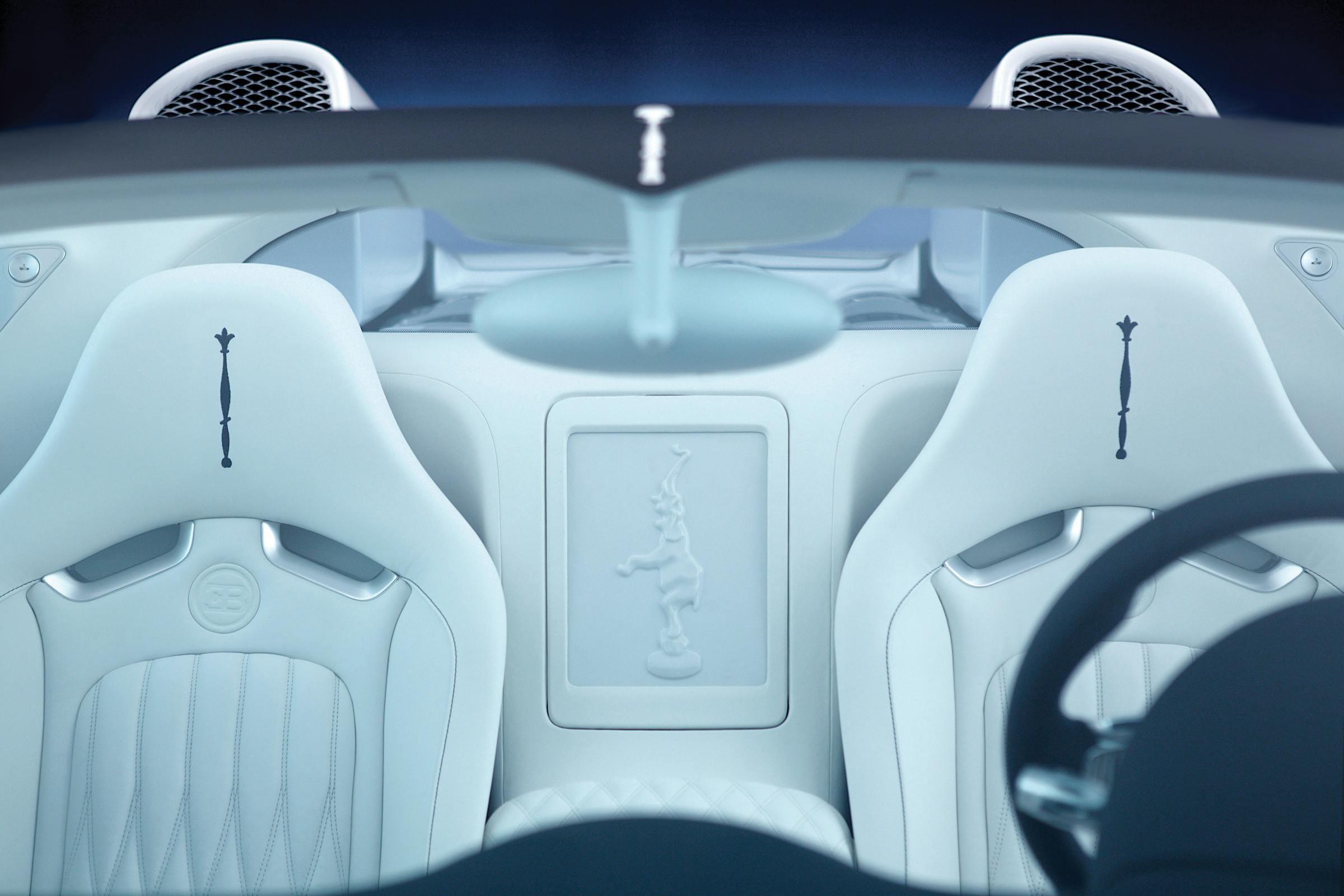
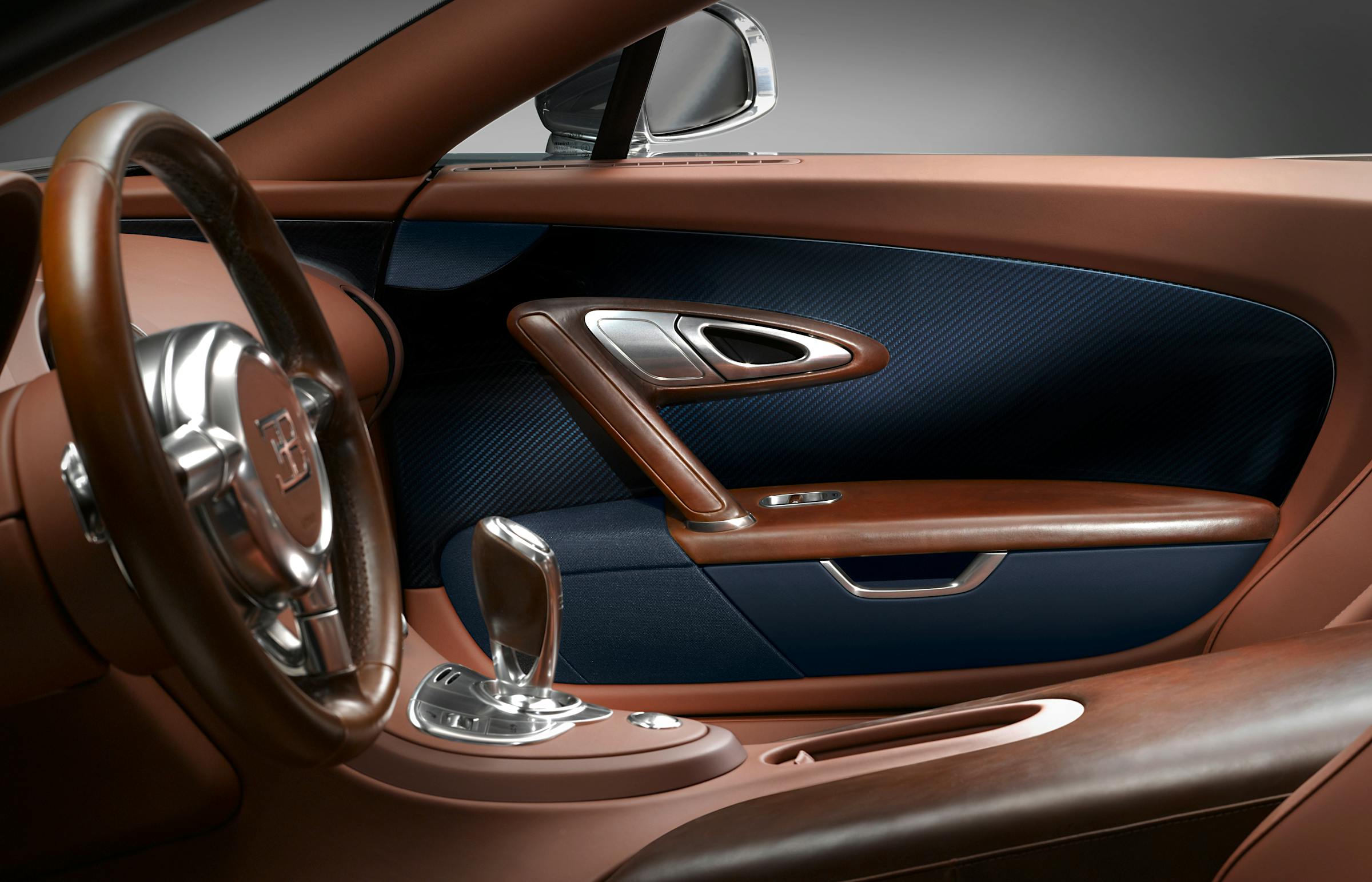
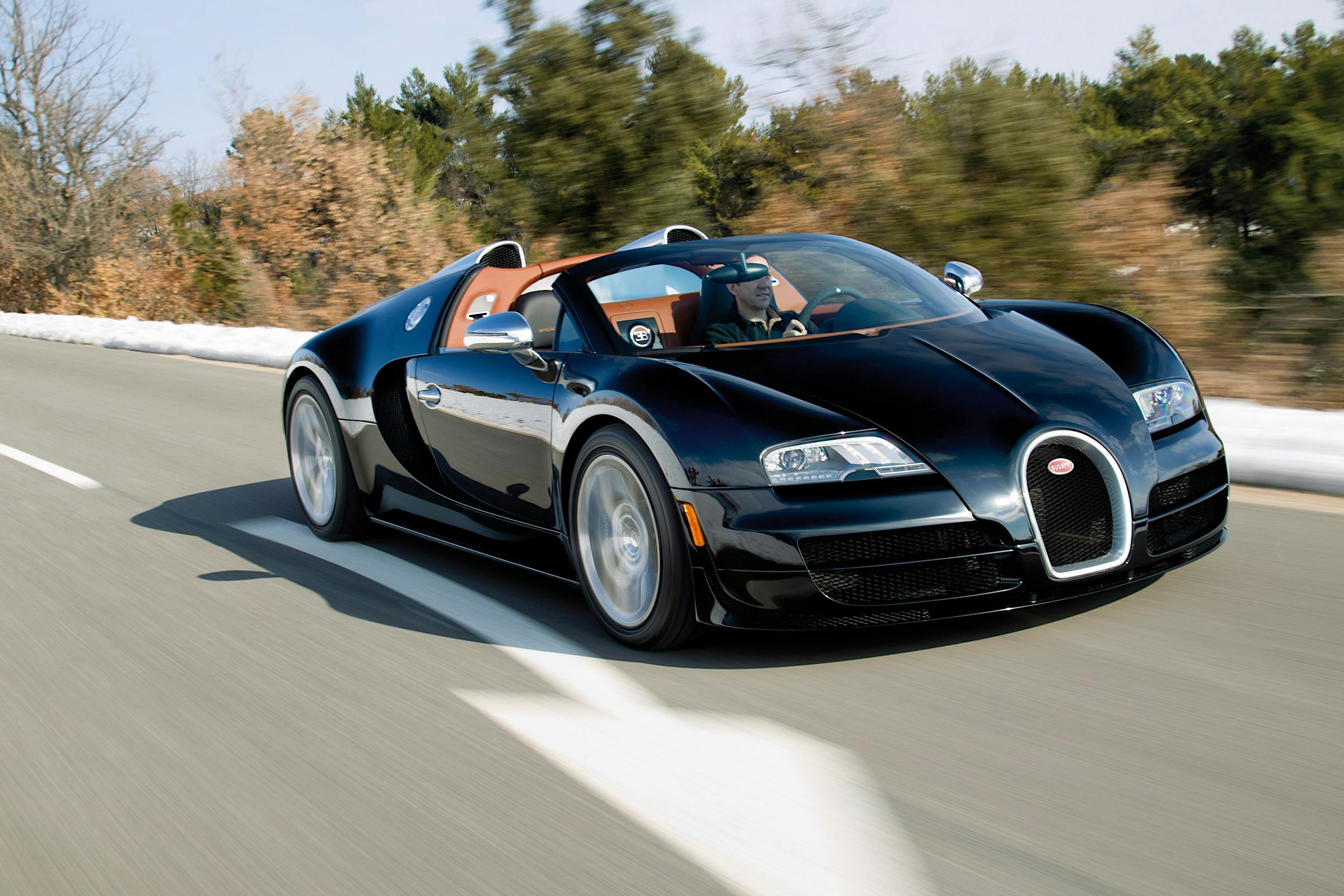
Six legends, 18 cars, all based on the Grand Sport Vitesse — each one a modern translation of a chapter of Bugatti history.
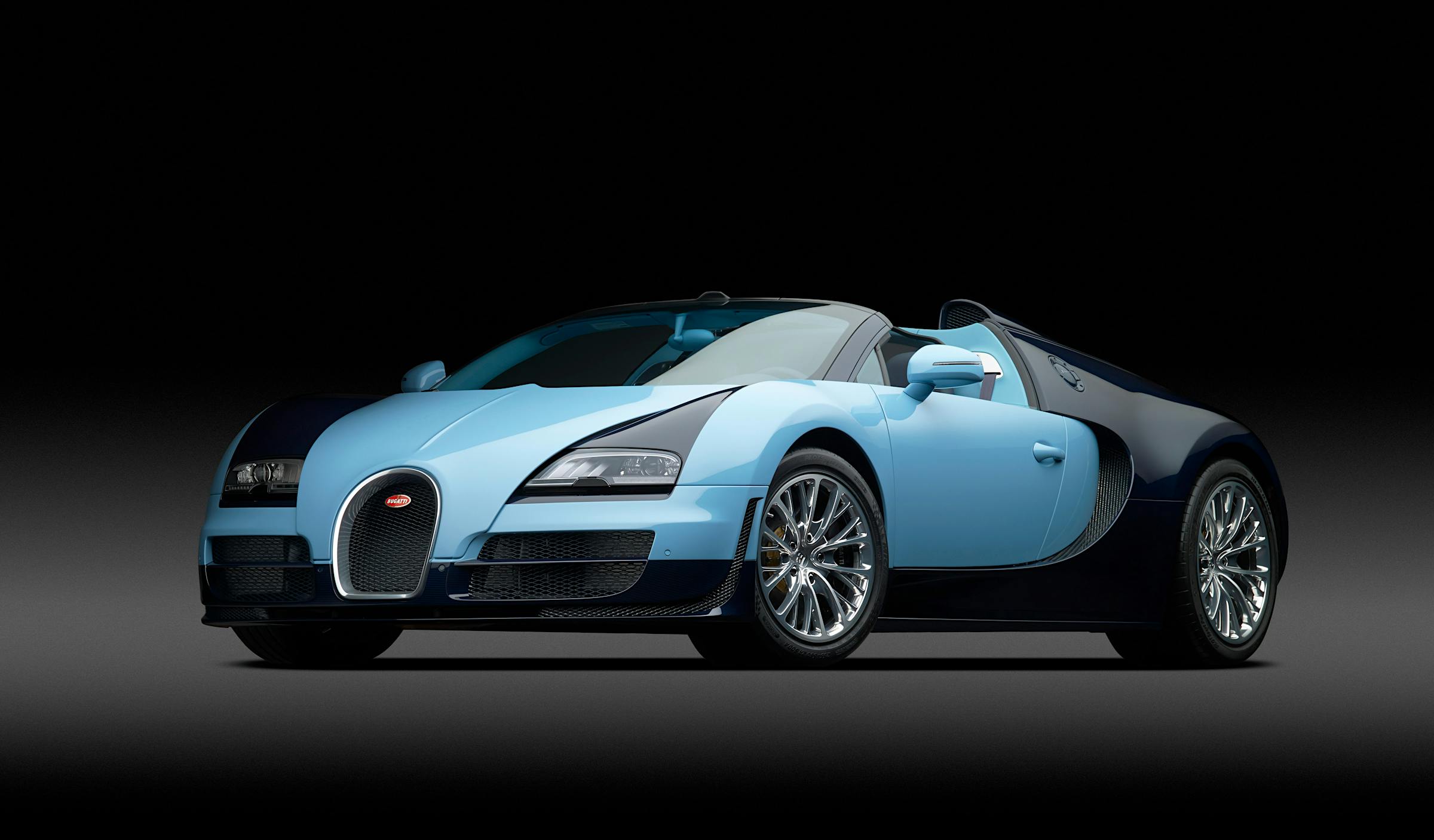
Launched with "Jean-Pierre Wimille" at Pebble Beach in August 2013 and closed with "Ettore Bugatti" in August 2014 — all 18 cars were sold before the final model was revealed. All are based on the 1,200 PS W16 of the Grand Sport Vitesse.
Homage to the 1937 Le Mans-winning 57G Tank: Bleu Wimille, the Le Mans circuit silhouette beneath the rear wing.
Homage to the 57SC Atlantic: jet-black carbon, the first platinum horseshoe grille.
Homage to the Type 35 and the Targa Florio: light-blue carbon, the Targa circuit drawn beneath the wing.
Homage to the sculptor Rembrandt: bronze-tinted carbon with Cognac leather.
Homage to the Type 18 "Black Bess": all-black carbon with gold accents — a speed legend from 1913.
Homage to the Type 41 Royale: a black-and-white "Yin-Yang" split of polished aluminium and carbon.
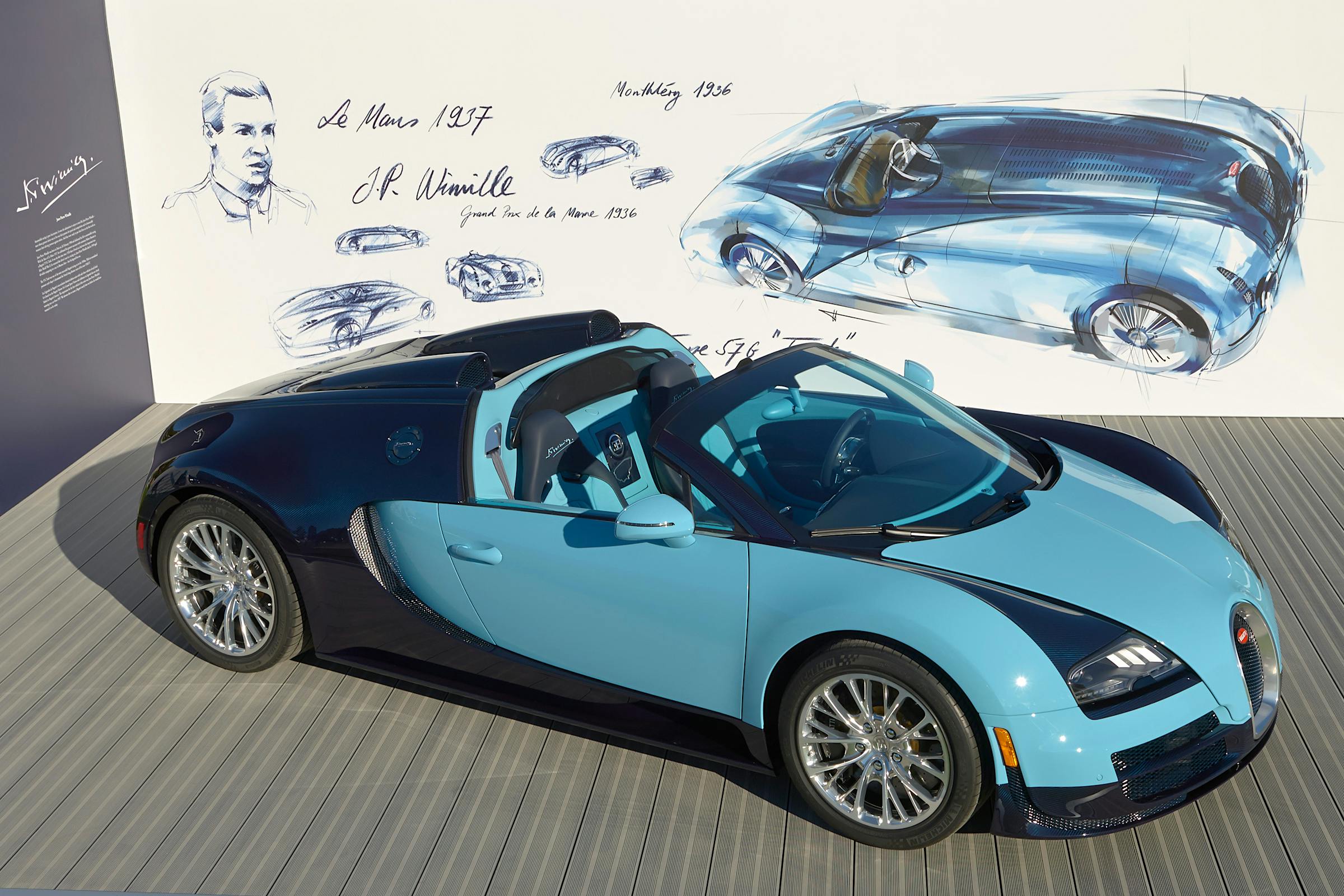
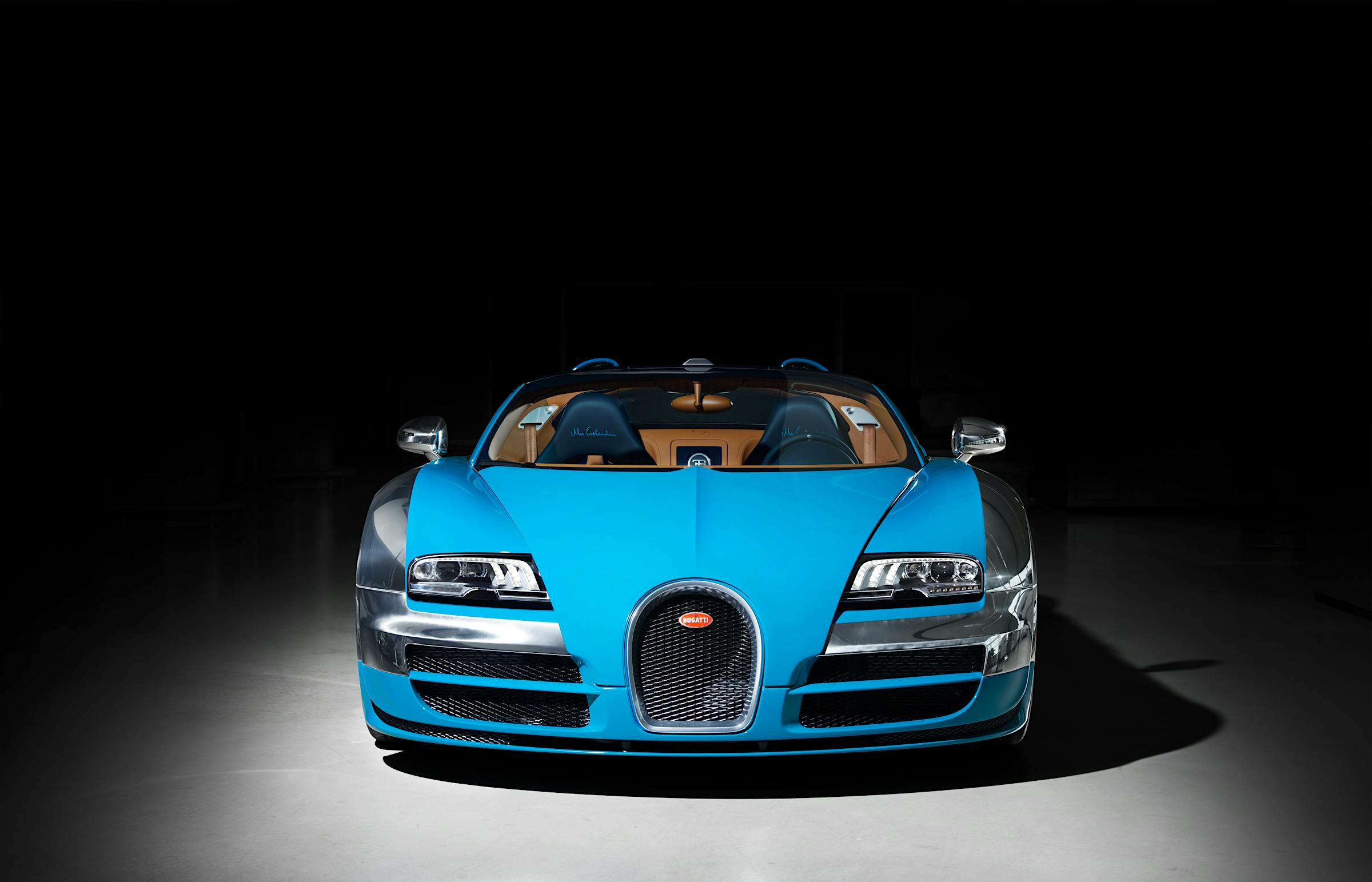
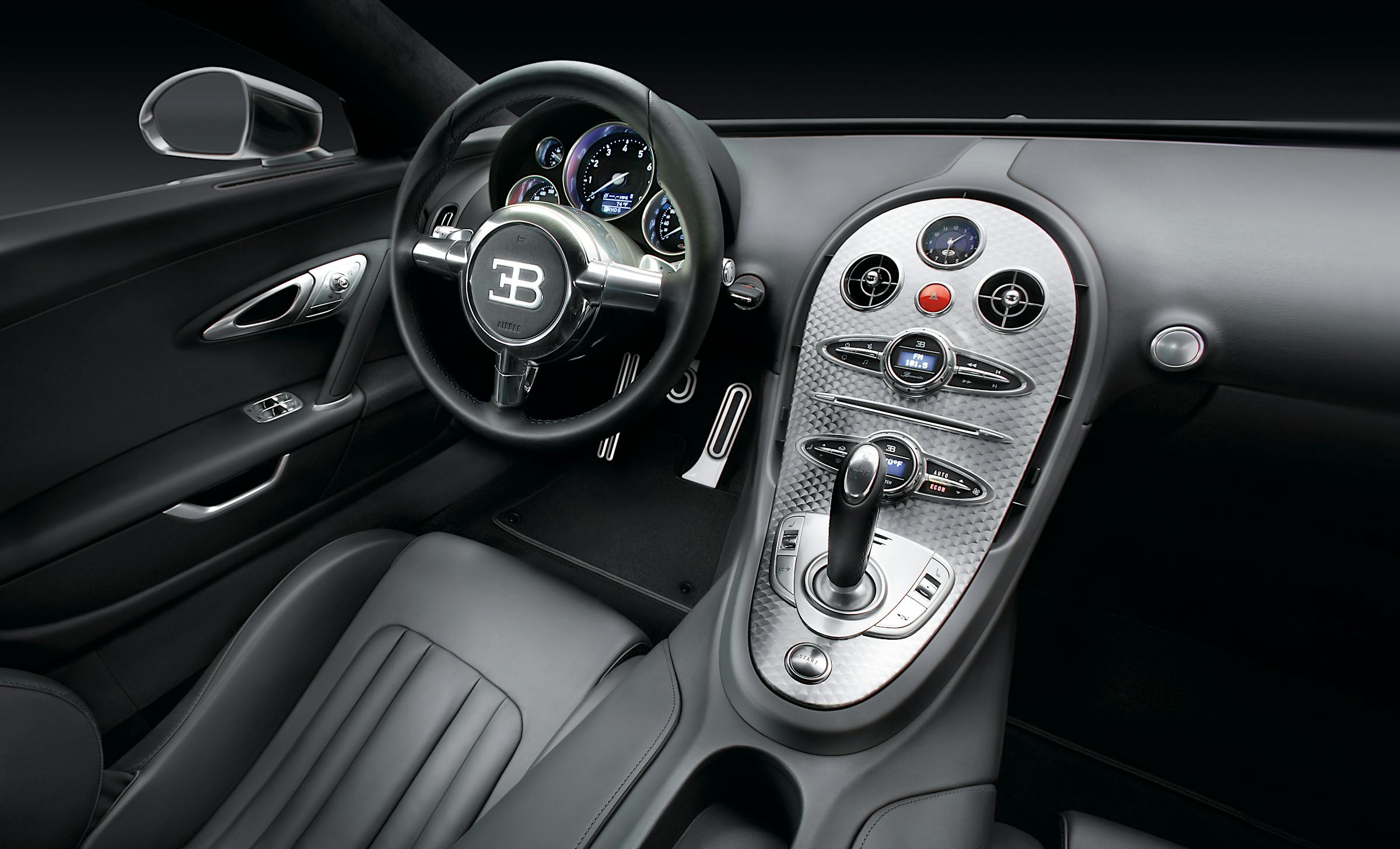
We hope that one day, perhaps even at the Concours d'Elegance in Pebble Beach, the grandchildren of the current owners will sit inside the Ettore Bugatti Legend car and begin to reflect on the beauty of the materials, and the history they hold.
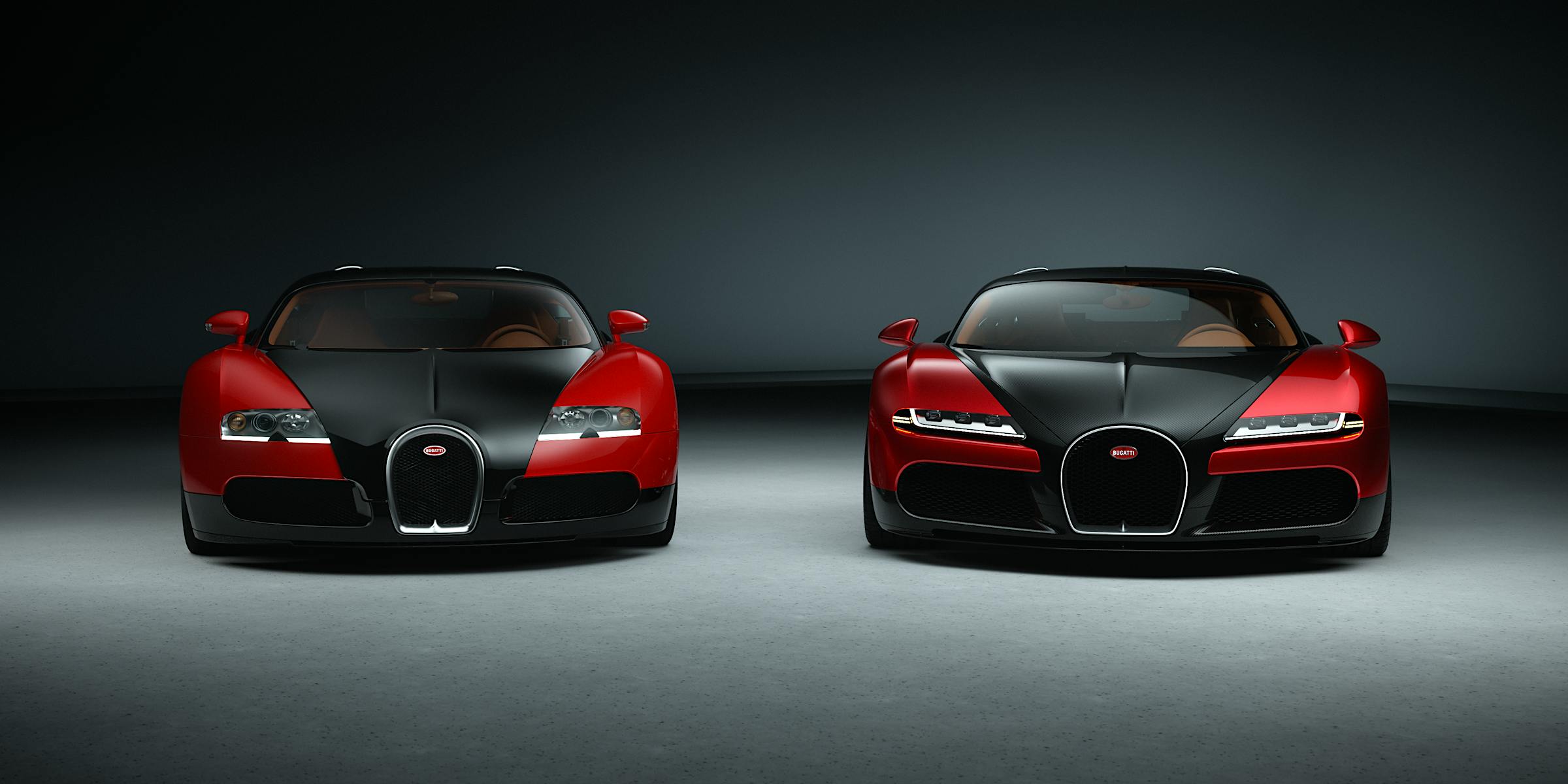
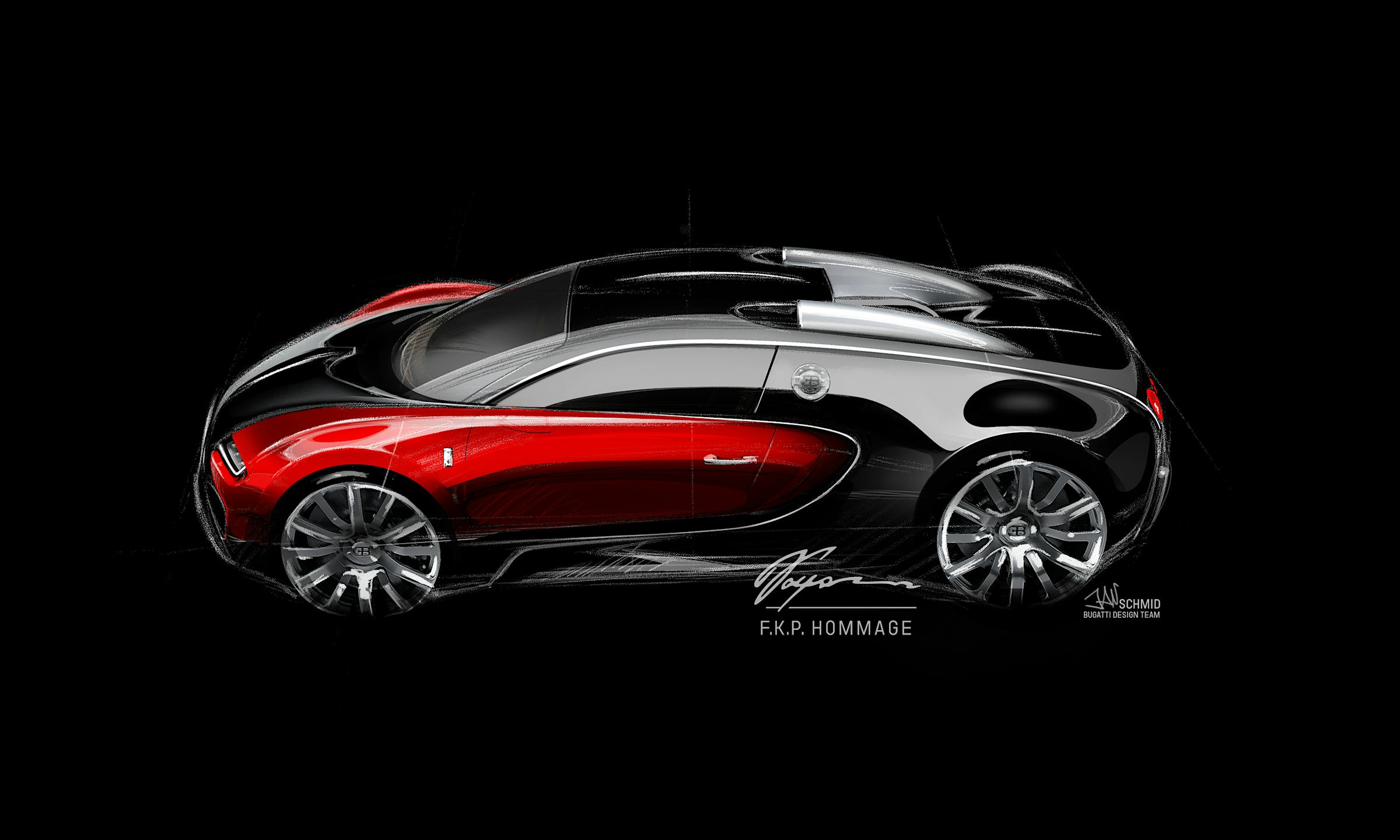
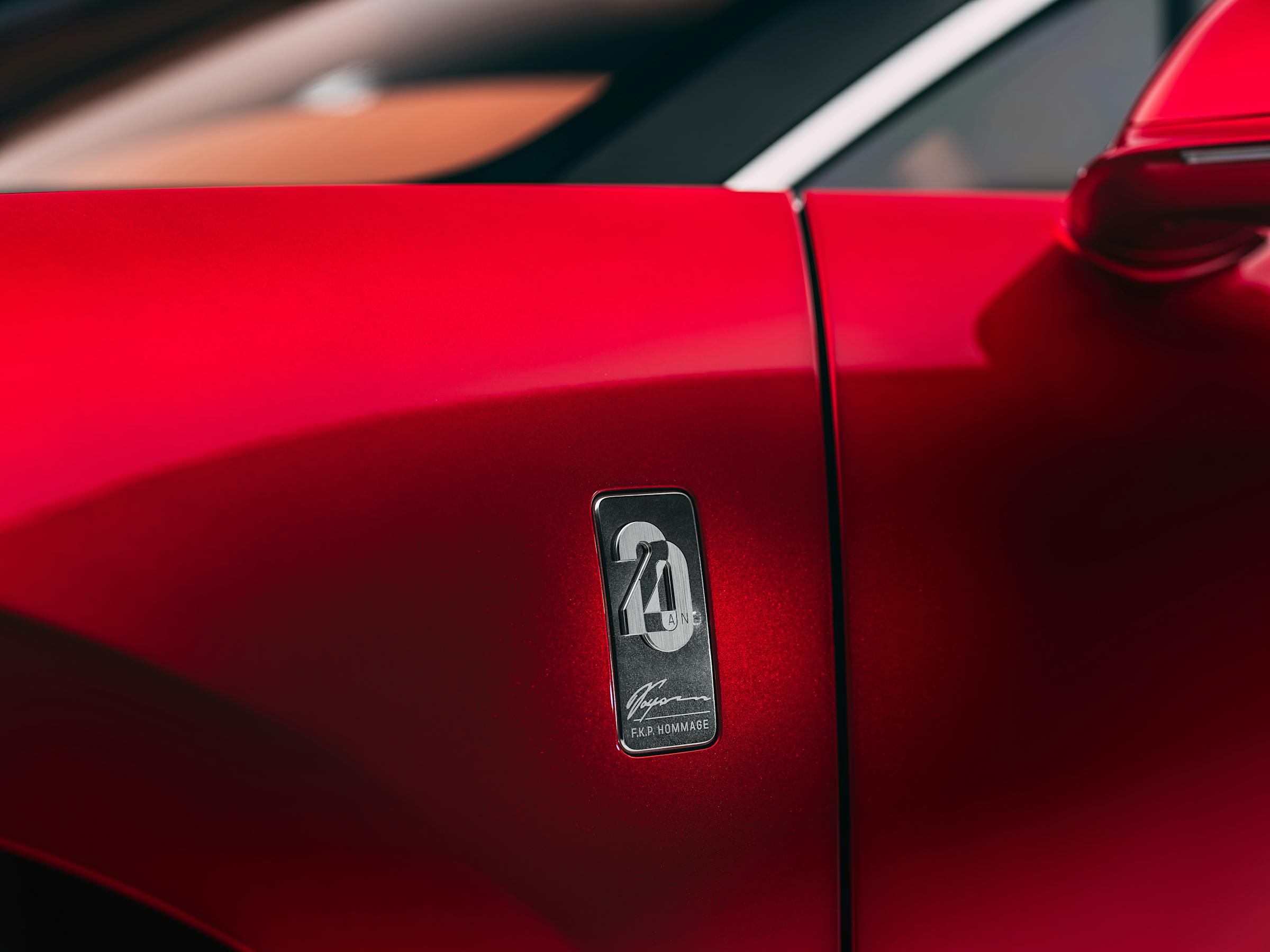
In 2026, twenty years of the Veyron — a new one-of-one honours its creator, Ferdinand K. Piëch.
In 2015, the Veyron turned ten — from the first delivery in 2005 to all 450 cars sold, one car wrote an era.
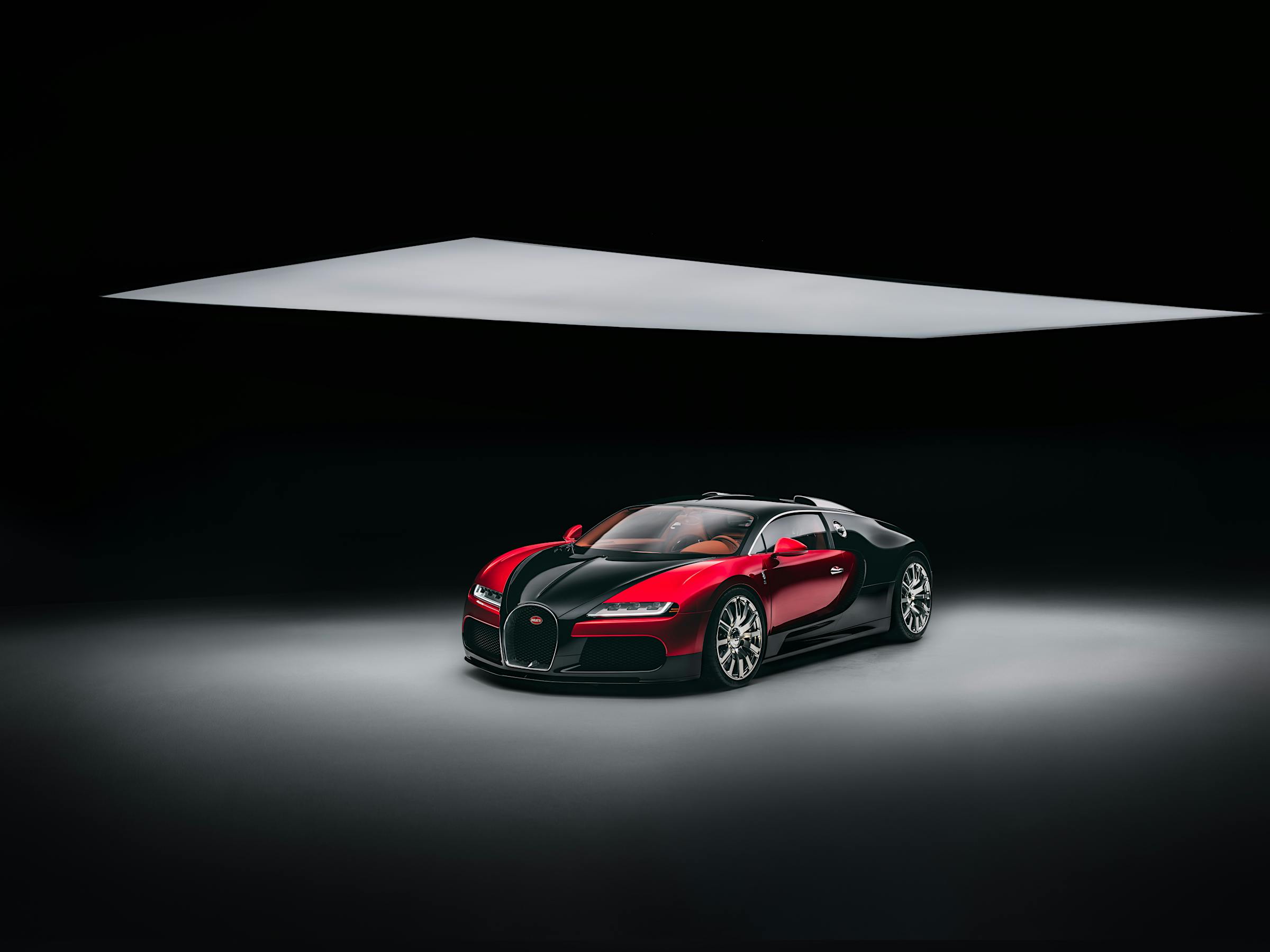
Unveiled at Rétromobile Paris in January 2026 alongside the original Veyron 16.4. The three-dimensional horseshoe grille is machined from a solid block of aluminium; the red exterior finish uses advanced layering — a silver aluminium-based coat beneath a red-tinted clear coat, creating extraordinary depth as light moves across it. A circular, Bauhaus steering wheel and an Audemars Piguet timepiece set into the dashboard — every detail honours Piëch's 1997 idea.
The second creation of Programme Solitaire: 1,600 PS quad-turbo, keeping the Veyron's leaning-back posture and dropping belt line — twenty years on, the original idea is reborn in a new form.
W16 · 8.0 litres · four turbochargers · all-wheel drive. Data from official Bugatti press releases and the 2005 technical specification.
Max PowerVeyron 16.4 · @ 6,000 rpm
Max Torque@ 2,200–5,500 rpm
Top SpeedSpeed Key · first past 400
0–100 km/hDesign target: under 3 seconds
Technical data from official Bugatti press releases, the 2005 Veyron 16.4 technical specification and officially published figures. Source: BUGATTI NEWSROOM · Veyron →